
Automating Material Fatigue Testing
Published on: June 12th, 2025 · Author: Rick Gijsberts
Introduction
Automating material fatigue testing gives labs repeatability, precise motion, and full data logging.
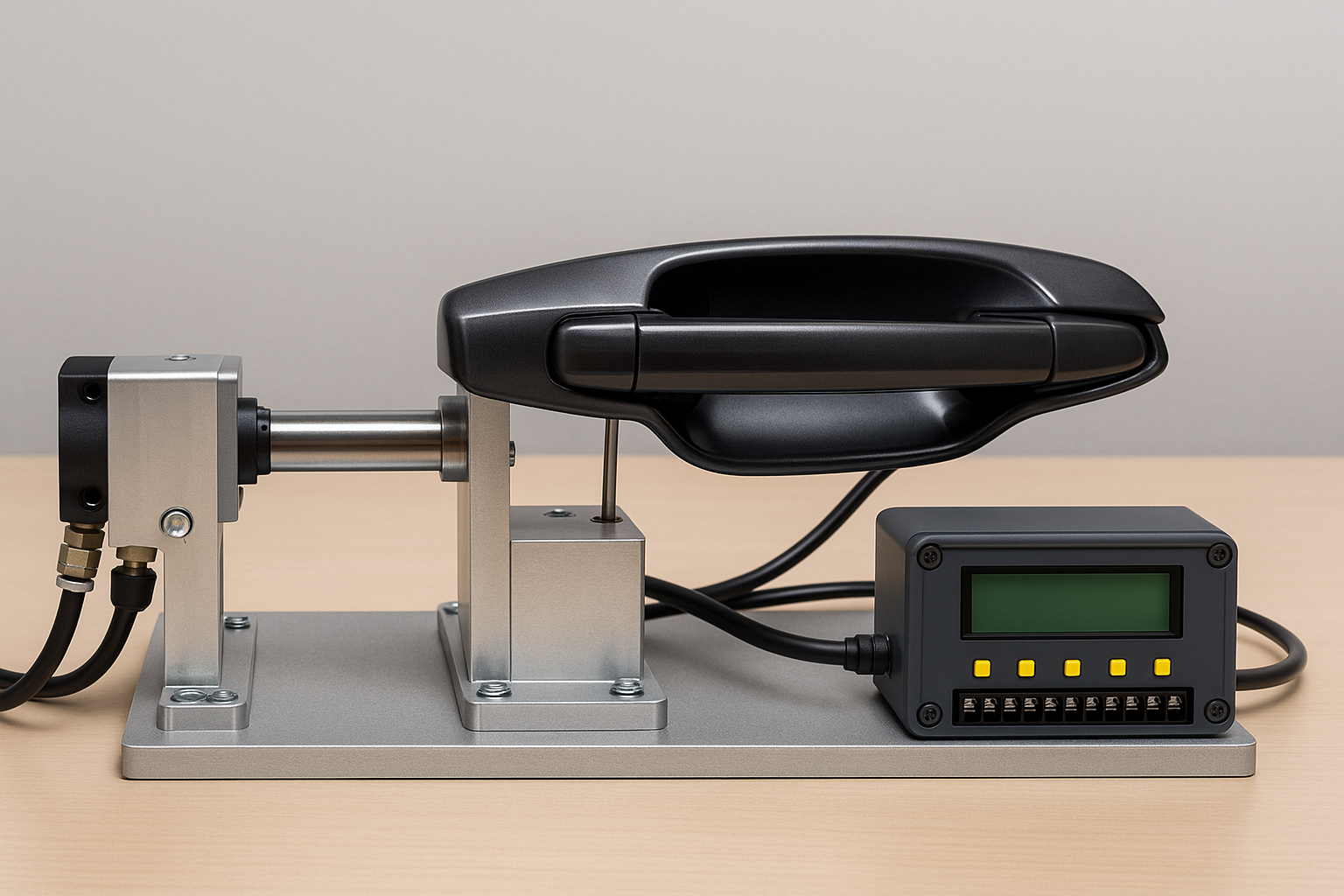
Why automation matters in fatigue research
Material fatigue tests run for thousands or millions of cycles. Manual control can introduce variation or errors. Thus, automating fatigue testing ensures consistent behavior, accurate results, and better efficiency for R&D labs.
With GOcontroll’s modular controllers, labs can build test rigs that run autonomously, log data, respond to anomalies, and adapt on the fly. In this article, we explore how a controller can handle actuators, sensors, test sequencing, and logging to support high-quality material science.
Automated material fatigue testing: the challenge
Fatigue testing involves cyclic load or displacement over many cycles. It tests how materials fail over time under repeated stress. To do it well, you need:
- Precise motion control (push/pull, bending, torsion)
- Reliable sensors (load cells, displacement, strain gauges)
- Long-term stability (weeks or months)
- Data capture and control logic
Automation solves these: you can set up a test, monitor it, intervene if needed, and get consistent, reproducible data.
Hardware architecture: actuators, sensors, controller
In a typical rig for, say, a door-handle fatigue test, you might use a linear actuator or pneumatic cylinder to open and close the handle. You attach a test specimen (the handle) between fixed and moving parts.
Sensors measure load, displacement, strain, and possibly temperature. All these connect to the controller’s input modules (analog, digital, or 4–20 mA). The output modules drive the actuator, valves, or motors.
A Moduline M1 is ideal for compact setups. It supports modular I/O, real-time processing, and rugged operation in lab environments. Its firmware can host control logic, safety features, and data handling.
Because the controller is modular, you can add channels, filters, or relays as needed, while keeping the system maintainable.
Model-based control and test logic
Rather than writing line-by-line code, users can use MATLAB Simulink to design motion profiles, control loops, and safety interlocks. In Simulink, you can:
- Define a cyclic motion (e.g. sinusoidal, triangular)
- Add feedback loops from load or displacement sensors
- Detect anomalies (overload, drift) and trigger alarms or shutdowns
- Log cycles, peaks, valleys, and changes over time
Once the model is simulated and validated, you compile it and deploy directly to the Moduline controller. This ensures the lab’s test logic matches the simulation exactly — no mismatch between design and execution.
Sequencing, scheduling, and anomaly handling
A fatigue test often involves phases:
- Ramp up to test amplitude
- Run main cycles (e.g. 100,000 cycles)
- Pause, record intermediate readings
- Continue or stop based on criteria
The controller manages this sequence automatically. It can also detect anomalies: e.g. sudden load drop, out-of-bounds displacement, or sensor failure. In such a case, it can pause the test, log the event, alert the user, or attempt recovery.
Because the logic is on the controller, the test continues even if the host PC is disconnected.
Data logging, remote access, and tuning
Every cycle, peak, anomaly, or parameter can be recorded with timestamps. The controller buffers this to local storage, and streams to a lab server or cloud if available.
Furthermore, using a Node-RED dashboard, a researcher can remotely monitor test status, view live graphs of load vs. time, or adjust parameters like amplitude or cycle rate. They log in from a laptop, tablet, or phone. They might tweak the test mid-run, for instance, slightly increase load or change pause intervals—all without stopping the machine.
This flexibility is powerful: you don’t have to physically access the rig to adjust or monitor it.
Why this approach works in labs
Automating fatigue testing with a modular controller brings several benefits:
- Repeatability: identical motion profiles across tests
- Reduced human error: less manual intervention
- Reliability: continuous operation over long durations
- Rich data: cycle-by-cycle records, anomaly logs, metadata
- Adaptability: models can evolve with new experiments
- Safety: built-in logic can pause or abort on faults
As labs push material research—new alloys, composites, hybrids—the ability to reliably run many long tests in parallel becomes a strategic advantage.
Conclusion
By combining model-based design, modular hardware, and remote tuning, automating material fatigue testing becomes feasible, reliable, and insightful. GOcontroll’s approach ensures rugged, flexible, and connected control for research labs.
Latest blog
-
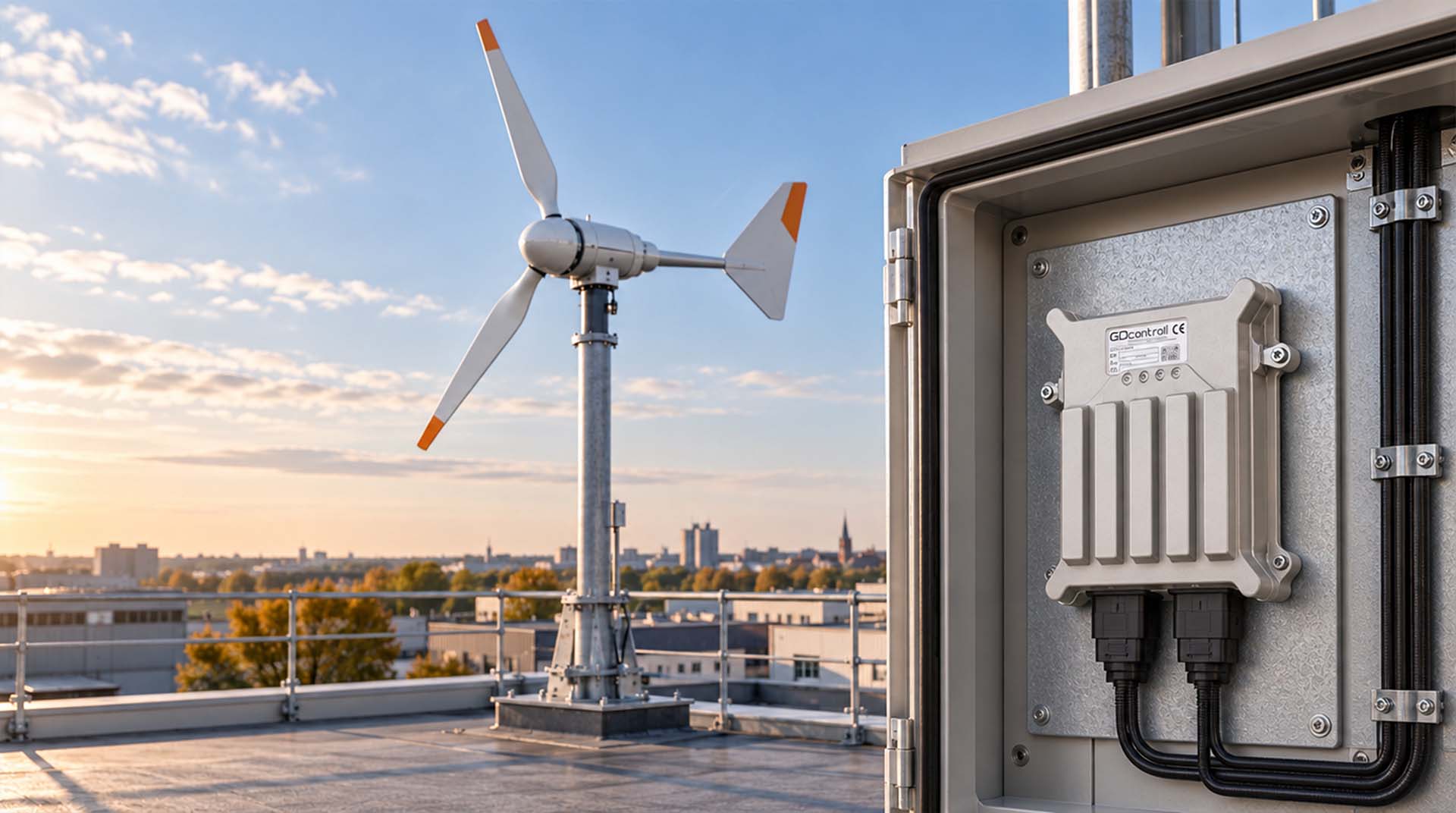
Rooftop Wind Turbine Control Node: Modular Control and Monitoring
The Moduline M1 controls rooftop wind turbines with smart load control, active yaw adjustment, vibration monitoring, and real-time remote dashboards.
-
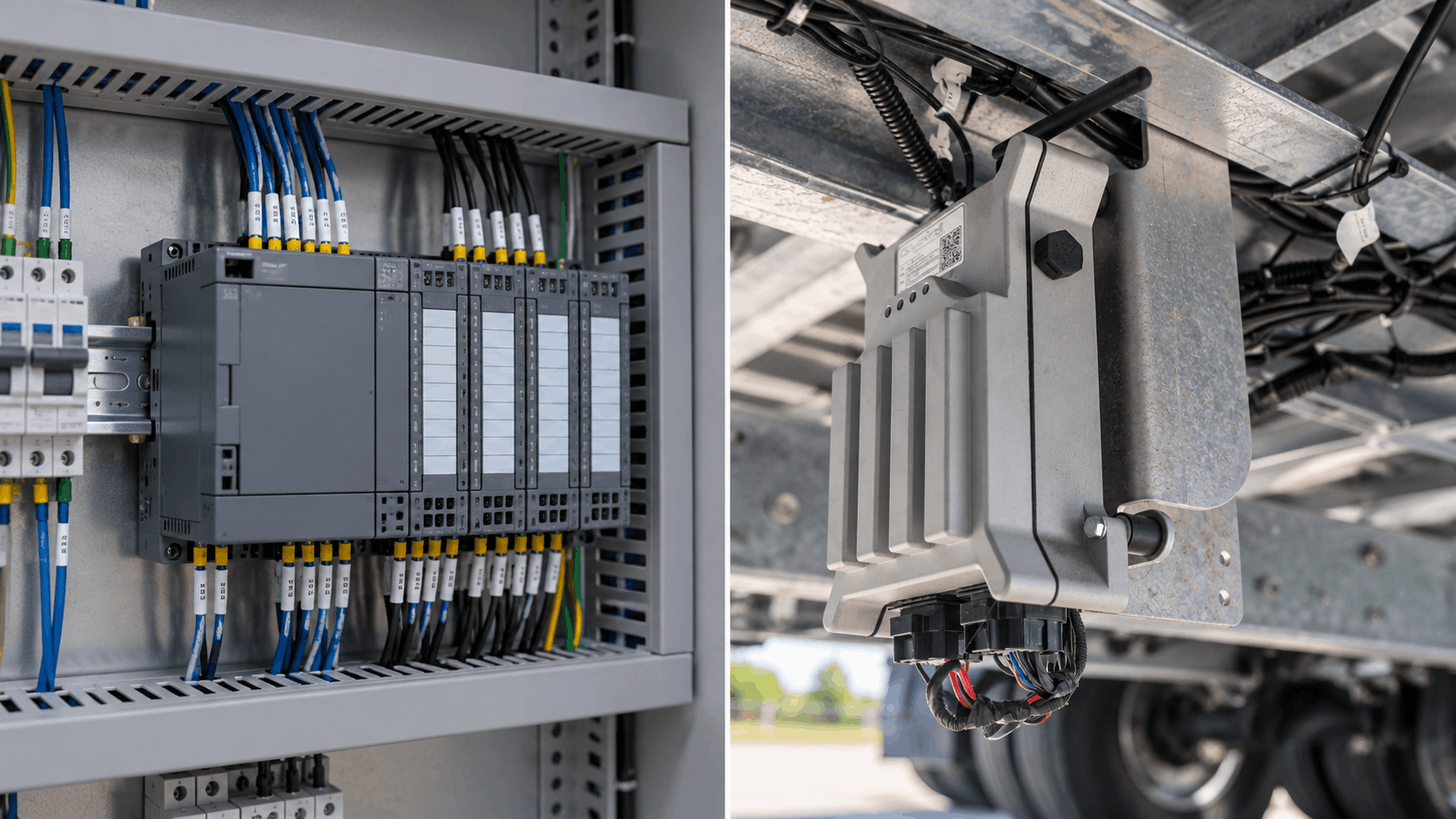
GOcontroll Moduline or a standard PLC: which controller fits your machine?
A standard PLC or GOcontroll Moduline? See how they differ in demanding environments, actuator control, flexibility and connectivity, with four applications in practice and…
-

Precise Linear Control Using Moduline
Moduline L4 linear actuator control delivers precise motion using half-bridge outputs, feedback inputs, and Simulink-based control loops.