
Predictive Maintenance with Moduline Control
Published on: October 23rd, 2025 · Author: Mees Meyboom
Introduction
A modular controller brings early warnings, fewer failures, and smoother machine operation to small factories.
 Introduction
Unplanned downtime is one of the most expensive problems in industrial operations. Machines stop, schedules fall apart, and repair costs rise quickly. Predictive maintenance changes this by spotting issues early. With a GOcontroll Moduline controller, factories can collect vibration, pressure, temperature, and motor-current data directly at the machine. The controller processes this data at the edge and sends clear, early warnings. Because of this, teams can fix problems before breakdowns occur.
A Modular Platform for Industrial Monitoring
Real-Time Data Collection and Edge Processing
Detecting Early Signs of Mechanical Wear
Many failures start with subtle symptoms. The Moduline platform helps detect:
- Bearing wear
- Pump cavitation
- Misalignment
- Overheating
- Lubrication issues
- Irregular operating cycles
By watching several sensors at once, the controller builds a clear picture of machine health. For example, a slight increase in vibration combined with higher temperature often signals early bearing damage. With this knowledge, teams can plan repairs instead of waiting for an emergency.
IoT Dashboards and Trend Insights
Model-Based Development for Advanced Analysis
A Practical Step Toward Higher Uptime
Latest blog
-

Rooftop Wind Turbine Control Node: Modular Control and Monitoring
The Moduline M1 controls rooftop wind turbines with smart load control, active yaw adjustment, vibration monitoring, and real-time remote dashboards.
-
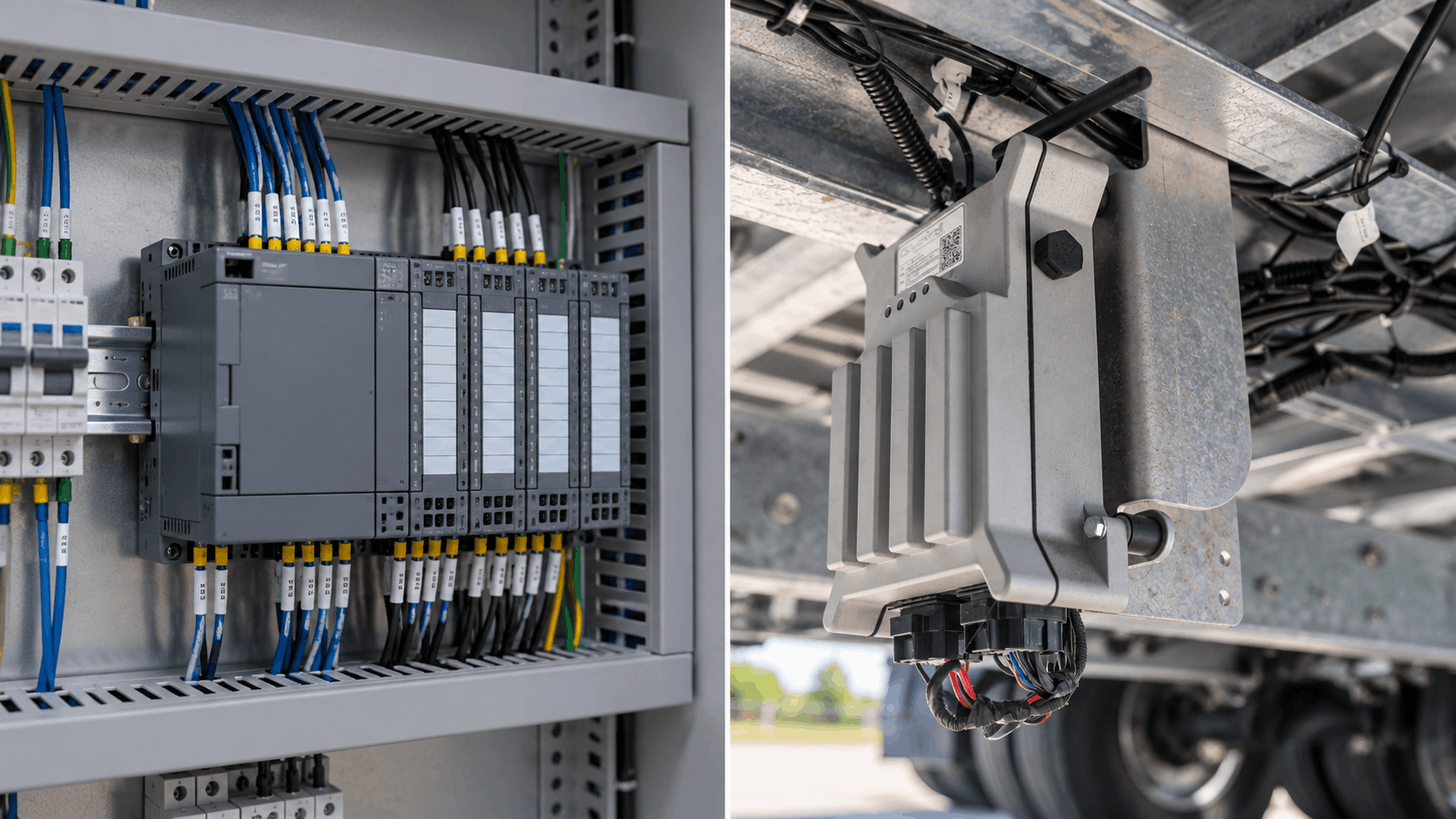
GOcontroll Moduline or a standard PLC: which controller fits your machine?
A standard PLC or GOcontroll Moduline? See how they differ in demanding environments, actuator control, flexibility and connectivity, with four applications in practice and…
-

Precise Linear Control Using Moduline
Moduline L4 linear actuator control delivers precise motion using half-bridge outputs, feedback inputs, and Simulink-based control loops.