
Variable Resistive Load Bank Controller
Published on: October 18th, 2025 · Author: Mees Meyboom
Introduction
A variable resistive load bank controller helps engineers test fuel cells with accuracy, repeatability, and full automation.
Introduction
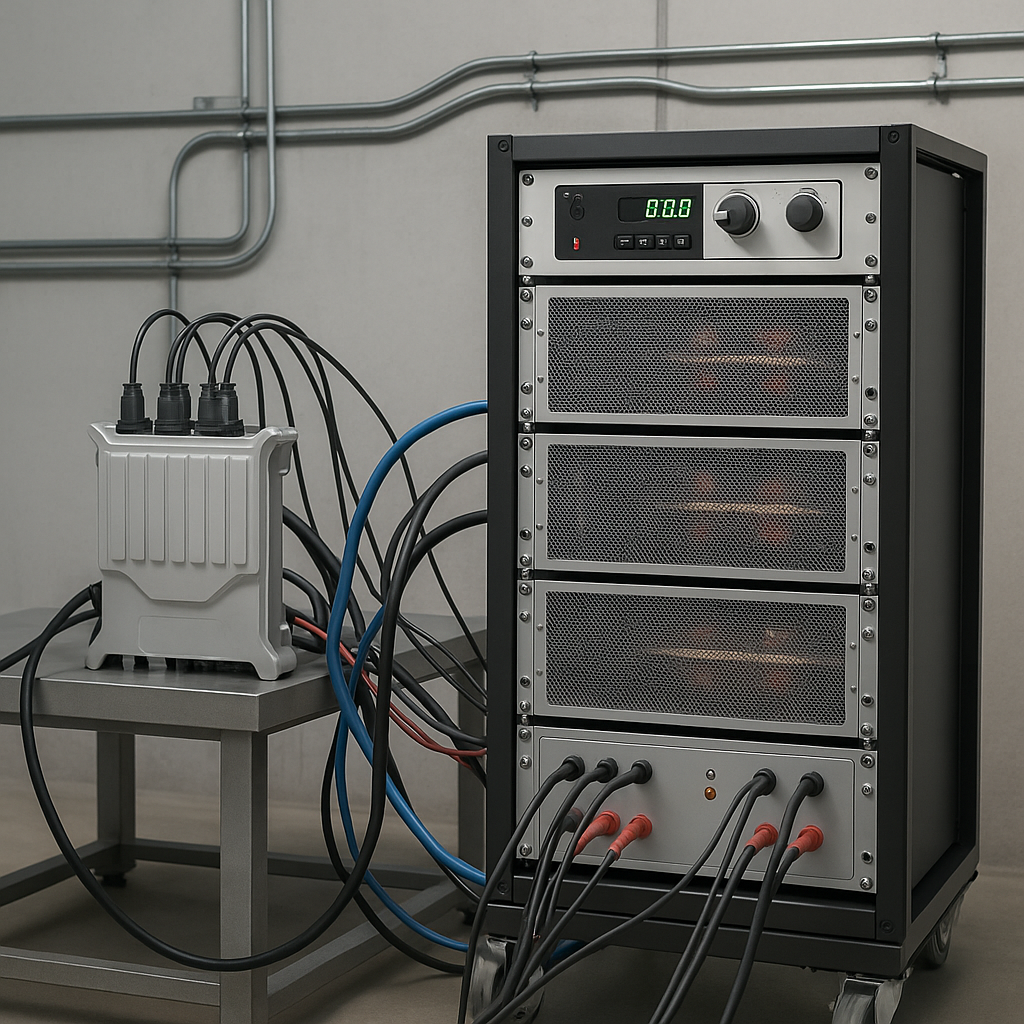
Fuel cell testing requires a stable, adjustable, and repeatable load. Without this control, it becomes difficult to compare results or track long-term behaviour. A smart resistive load bank solves this by switching resistor elements in and out to create controlled load steps. The GOcontroll Moduline L4 offers a strong base for this kind of setup thanks to its modular design, rugged aluminium enclosure, and wide range of I/O options. Because it allows solid-state contactors, sensors, and logic to work together, it turns a basic resistor bank into a flexible laboratory tool.
A Modular Platform for Load Bank Control
Accurate and Repeatable Load Control
Closed-Loop Operation for Dynamic Testing
Closed-loop control is important for advanced tests. The Moduline L4 can adjust its outputs based on real-time measurements, allowing it to follow a target load profile automatically.
With this method, the controller can:
- Increase load when current falls
- Reduce load when voltage sags
- Create smooth step profiles
- Run automated sweep tests
- Simulate dynamic operating cycles
Because the logic runs directly on the controller using Linux services, communication delays stay low, and response times stay consistent.
Clear Dashboards and Data Logging Through Node-RED
Fast Development and Model-Based Logic
A Scalable and Robust Test Platform
Latest blog
-

Rooftop Wind Turbine Control Node: Modular Control and Monitoring
The Moduline M1 controls rooftop wind turbines with smart load control, active yaw adjustment, vibration monitoring, and real-time remote dashboards.
-
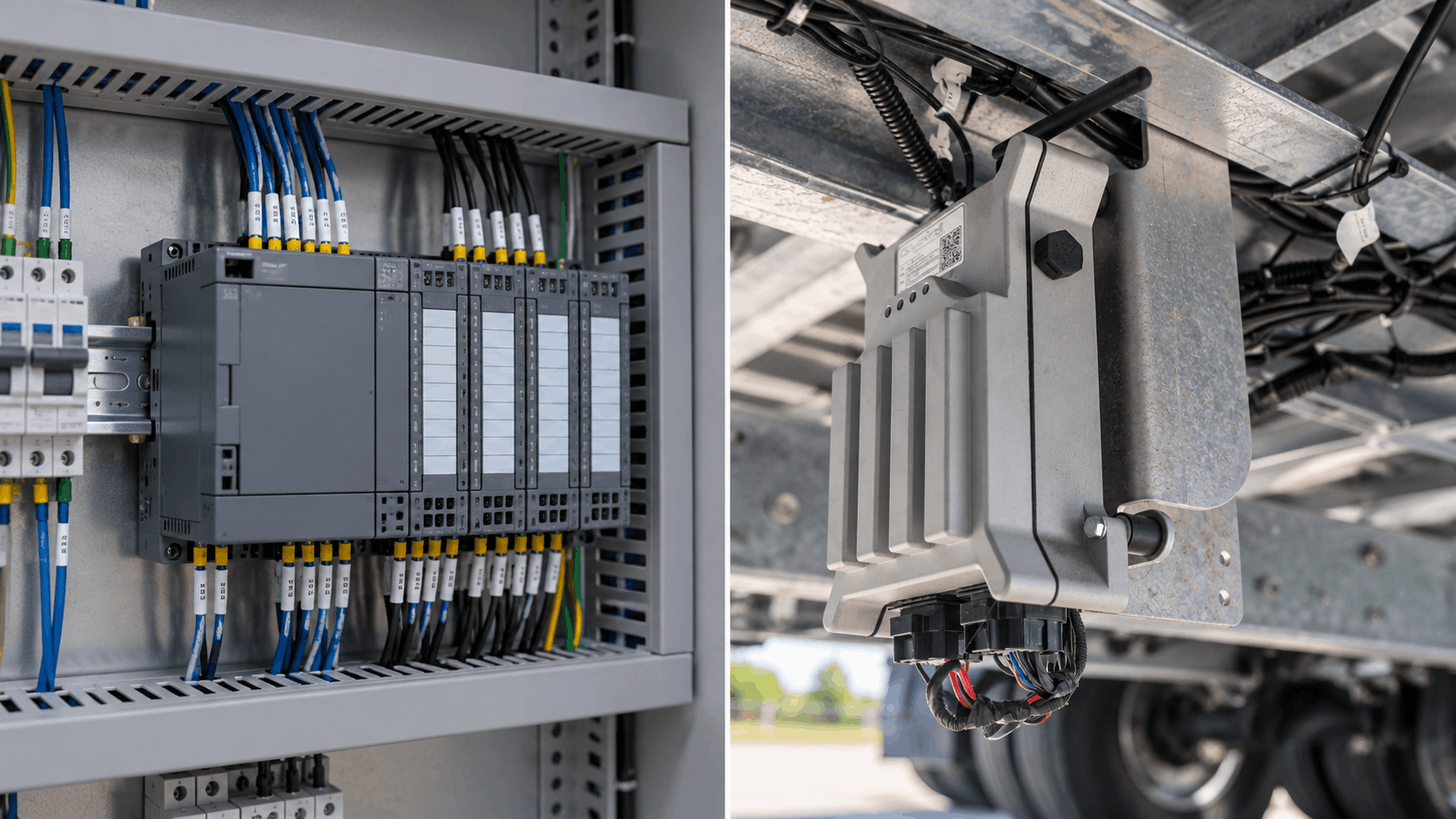
GOcontroll Moduline or a standard PLC: which controller fits your machine?
A standard PLC or GOcontroll Moduline? See how they differ in demanding environments, actuator control, flexibility and connectivity, with four applications in practice and…
-

Precise Linear Control Using Moduline
Moduline L4 linear actuator control delivers precise motion using half-bridge outputs, feedback inputs, and Simulink-based control loops.