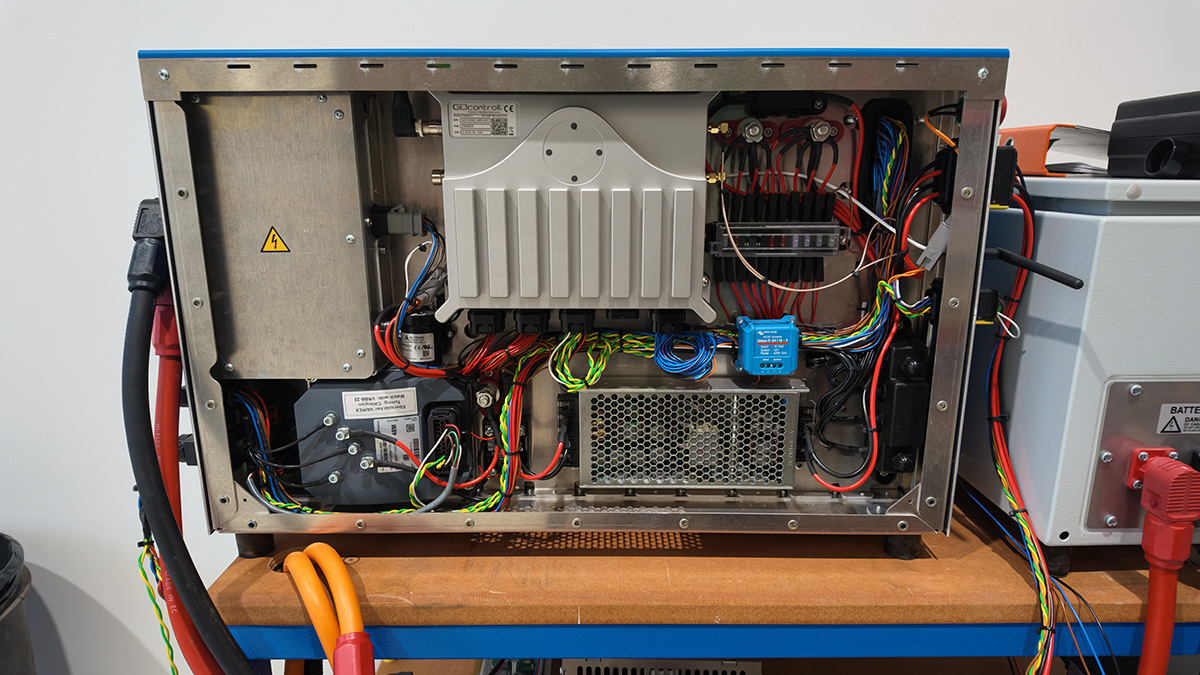
Selecting a fuel cell is only the beginning. The components, control system and application must then work together. Huib Hupkens van der Elst of H2Consultancy has spent more than twenty years bringing these elements together. His 5–10 kW fuel cell system shows how much development goes into a working installation and why he collaborates with GOcontroll.
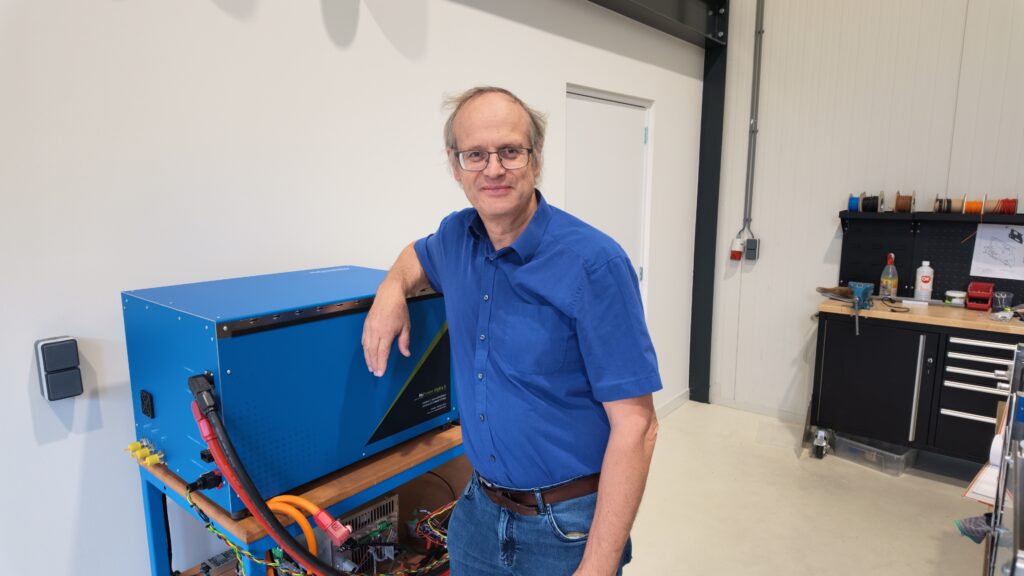
A career focused on the application
Huib started his career as an automotive engineer and worked at Philips, among other companies. In 2003, he started his own business. About two years later, he entered the field of hydrogen technology. Since then, he has developed systems for a wide range of applications, from small vehicles to buses and power supplies.
His speciality is building a complete system around a purchased fuel cell stack: the collection of cells in which hydrogen is converted into electricity. The supporting components around it form the balance of plant. Huib selects those components, designs how they work together and integrates the system into the final application.
This requires knowledge he has built up over many projects. Which supplier has a suitable component? How does it behave during testing? And what needs to change when the system is installed in a different vehicle?
A small vehicle as the starting point
Development of the current system began around 2020 with a request from a French customer: a 5 kW fuel cell system for a small urban vehicle. Finding a suitable stack proved difficult. Huib eventually found a Swiss supplier, with whom he undertook an extensive development and testing process.
The first stacks did not meet his expectations. Several further units and modifications followed. According to Huib, an improved version arrived around 2024 that allowed the system to run well. This opened the way for the next step: redesigning the test setup as an installation with a finished enclosure.
Meanwhile, interest in a 10 kW version had emerged. Huib incorporated that requirement into the design, making the same enclosure suitable for either a 5 or 10 kW version. What began as one specific request grew into a design for different power outputs.
Stable operation requires good control
One important challenge is how the fuel cell behaves during operation. Huib describes how a stack can become unstable. The control system must recognise this behaviour and adjust the control strategy accordingly. GOcontroll worked with him on the controls and the further development of the software.
The electrical connection also requires attention. A stack produces unregulated DC voltage. A DC-DC converter changes this to a voltage suitable for the application. Huib mentions a setup with a 48-volt buffer and a vehicle application at 96 volts. Each requires a suitable converter, so a previous choice cannot automatically be carried over to the next application.
Software he could understand
Huib’s interest in understandable control systems stems from his work at Philips. When developing machines there, he often sat next to a programmer, while finding it difficult to check the code himself.
“I wanted a control system that I could understand myself.”
That need led him to visual software development with MATLAB/Simulink and later to working with Rick from GOcontroll. Rick further developed existing software and made its structure more logical. Huib recalls that during an earlier project in India, he was able to make small changes and fine-tune settings himself.
Collaboration remains important. The software has grown more complex over time, and Huib can no longer follow every part as easily on his own. He therefore values both the hardware’s capabilities and the support in applying them.
“It has become a very good collaboration.”
Room for the next development
When new requirements arise, Huib wants to be able to adapt what the system does. The choice of inputs and outputs and the ability to further develop the software suit his way of working.
“This gives me much more flexibility and many more possibilities.”
The next steps are concrete, but still in development. For a Dutch customer, the finishing work, vehicle integration and subsequent tests still need to be taken forward. Huib is also exploring opportunities for generators and licensed production abroad. Remote monitoring is on his wish list; he has not yet used it in his own application.
Higher power outputs also appeal to him. A 20 kW version, for example, would require fresh decisions about pumps and other supporting components. It is precisely the challenge of working out a new system that motivates him. First, the current development needs to be completed. After that, Huib hopes to build something once again that proves its value in practice.