
IoT Controller for Mobile Machinery: Selection Guide
Published on: August 4th, 2025 · Updated: November 13th, 2026 · Author: Rick Gijsberts
An IoT controller reads sensor or machine signals, executes application logic, controls outputs, and exchanges data over a network. The GOcontroll Moduline M1 combines Linux with four plug-in module slots; Wi-Fi/Bluetooth and 4G/LTE/GPS connectivity are optional.
What should an industrial IoT controller provide?
Select an industrial IoT controller by matching the machine’s signals, output loads, network interfaces, and development requirements. A programmable IoT controller lets engineers define application behavior, but its usable I/O depends on the compatible modules installed.
The GOcontroll Moduline M1 and GOcontroll Moduline L4 offer different module capacities and CAN interface counts:
| Parameter | GOcontroll Moduline M1 | GOcontroll Moduline L4 |
|---|---|---|
| Operating system | Linux | Linux |
| Plug-in module slots | 4 | 8 |
| CAN 2.0B interfaces | 2 | 4 |
| Ethernet | 10/100 Mbps | 10/100 Mbps |
| Wireless options | Wi-Fi/Bluetooth; 4G/LTE/GPS | Wi-Fi/Bluetooth; 4G/LTE/GPS |
Wireless options are not universal fitted features. Check the selected configuration and installation conditions rather than assuming that every Linux controller has the same connectivity. For environmental considerations, see rugged IoT controller hardware.

How does an IoT controller differ from an IoT gateway?
An IoT gateway primarily connects networks or translates and forwards data. An IoT controller executes application logic and controls outputs. One configured system can perform both roles, but gateway functionality does not by itself establish actuator-control capability.
For mobile machinery, distinguish an edge gateway that forwards machine data from a controller application that also evaluates signals and commands outputs. Select the hardware and software for the required role.
How does remote machine monitoring work?
Example architecture—not a supplied application:
- Connect a compatible sensor to a selected input module.
- Process the reading in the controller application and command a suitably rated output where required.
- Write selected signals to a configured storage destination for a remote data logger.
- Send selected values over the configured network to an application dashboard or cloud destination.
Monitoring requires acquisition of the relevant signals and application-specific processing and presentation. Dashboards, alarms, logging destinations, cloud connections, and fleet-level views must be specified as application requirements, not assumed from network connectivity.
For remote control of industrial equipment, define how received commands are checked before the local application acts on them.
GOcontroll Moduline controllers are used for automated water management in the published Equisport case. They are also used in electrification systems, while predictive-maintenance functionality requires application-specific software and validation.
What remote access and update functions are provided?
GOcontroll Connected provides secure remote access and firmware updates for the GOcontroll Moduline S1, GOcontroll Moduline M1, and GOcontroll Moduline L4. These services are distinct from application-specific monitoring dashboards and data logging.
The GOcontroll Moduline M1 and GOcontroll Moduline L4 run Linux. Deployment security depends on hardening, credentials, exposed services, network configuration, and update practices; Linux alone does not establish a secure installation.
Which programming tools are required?
GOcontroll Moduline S1, GOcontroll Moduline M1, GOcontroll Moduline L4, and GOcontroll Moduline HMI1 support graphical development with MATLAB Simulink and Node-RED. Custom integrations may require additional code, and all applications require configuration and testing.
The documented MATLAB Simulink workflow for GOcontroll Moduline M1 and GOcontroll Moduline L4 requires Embedded Coder, MATLAB Coder, Simulink Coder, Stateflow, and the GOcontroll Simulink Toolbox. Models use the GOcontroll Linux template and are built through Embedded Coder. Consult the Moduline programming documentation for the relevant workflow.
Freely programmable describes freedom to define application logic. It does not mean free hardware, free development tools, or an entirely code-free integration.
Frequently asked questions
What is an IoT controller?
An IoT controller reads connected signals, executes application logic, controls outputs, and exchanges data over a network. Its I/O and connectivity must match the intended equipment.
What is IoT automation?
IoT automation uses connected sensors, control logic, and actuators to perform configured actions and exchange operational data. The application determines which decisions happen locally and which depend on remote services.
What is an IoT microcontroller?
An IoT microcontroller is a programmable chip used in a connected embedded device. It is not a complete industrial controller, which also needs suitable power circuitry, interfaces, I/O, connectors, and an enclosure.
What does IoT stand for?
IoT stands for Internet of Things: physical devices connected to exchange data over networks.
Key takeaways
- An IoT controller combines application control logic with networked data exchange.
- GOcontroll Moduline M1 has four module slots; GOcontroll Moduline L4 has eight.
- Select compatible I/O modules and connectivity options for the machine and installation.
- GOcontroll Connected remote access and firmware updates are distinct from application-specific monitoring, logging, and predictive maintenance.
Latest blog
-
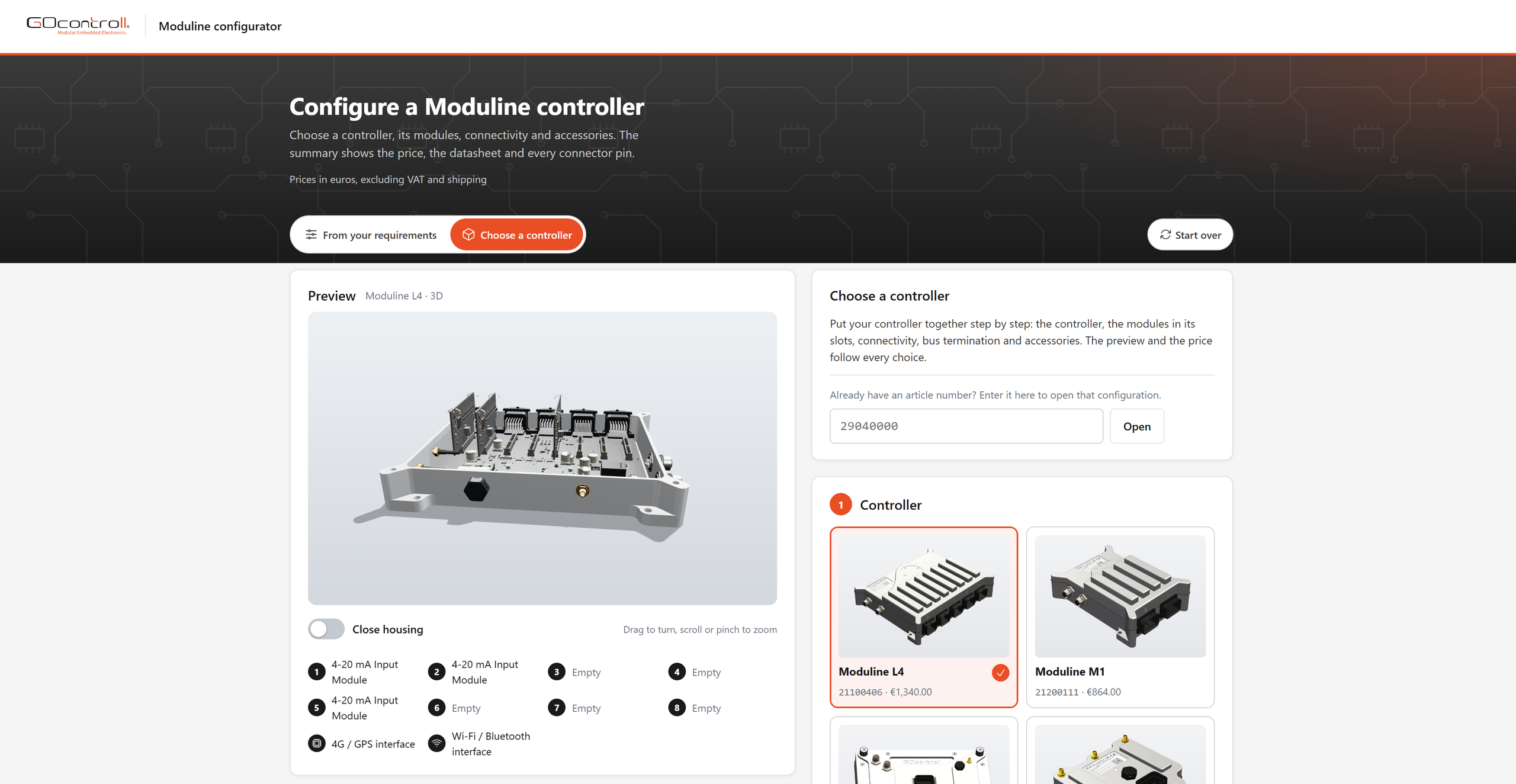
Which controller is right for your machine or vehicle? Start with what you want to control
Which connections and functions does your controller need? Practical examples explain inputs, outputs and communication, and show how to take your first steps in…
-
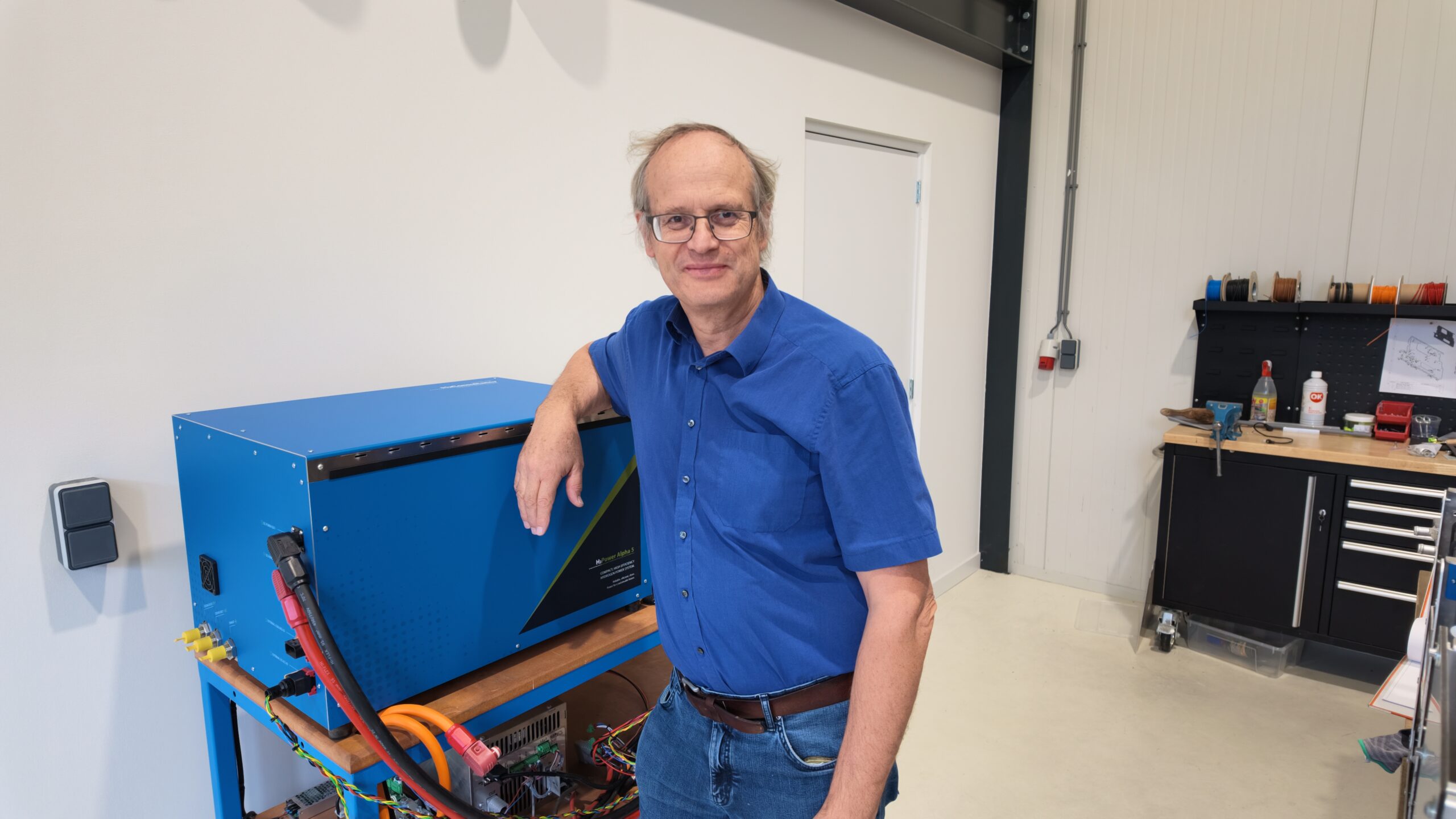
Interview with Huib from H2Consultancy
Selecting a fuel cell is only the beginning. The components, control system and application must then work together. Huib Hupkens van der Elst of…
-
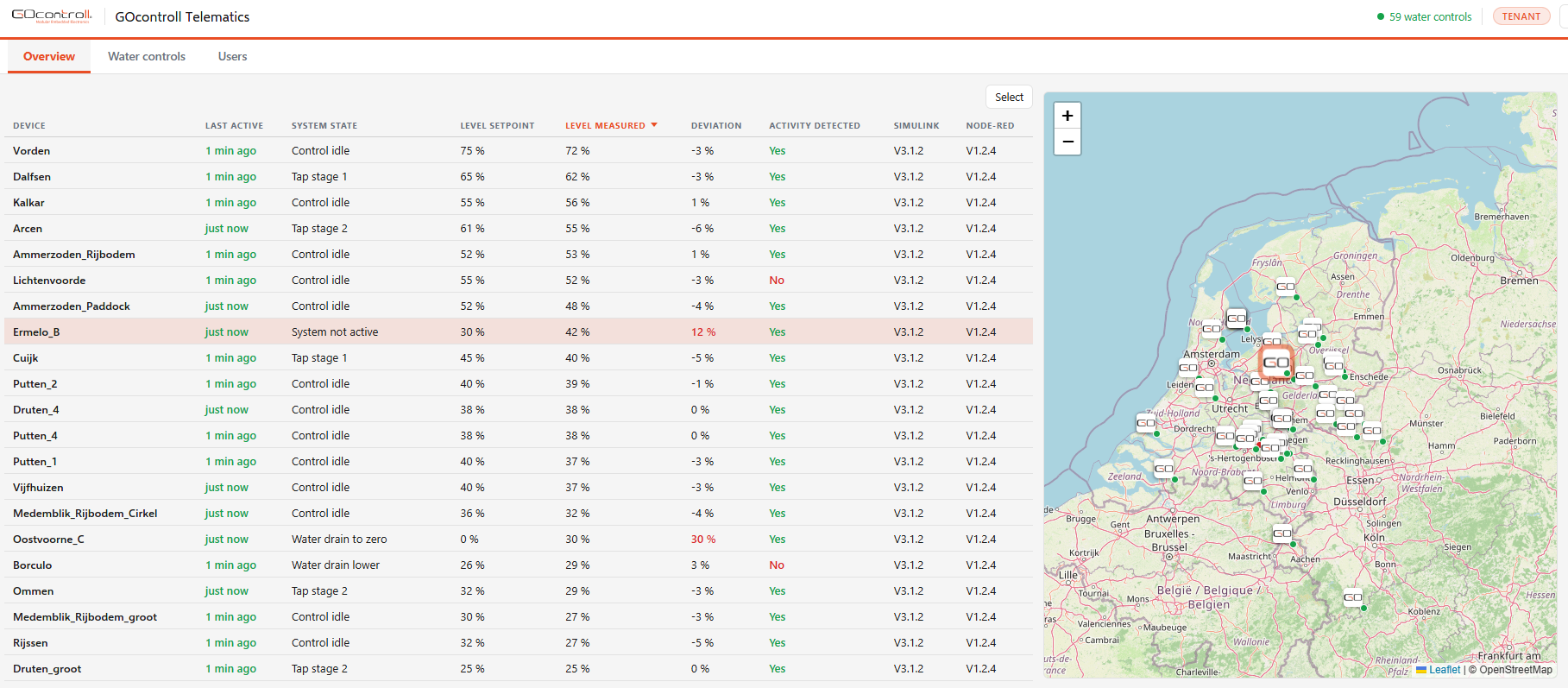
Telematics Retrofit: CAN Data or Added Sensors?
Older machines can join connected fleets, but a CAN connection does not guarantee useful data. Audit available signals, sensor requirements, and platform access before…