
Terrarium Controller: Custom M1 Automation
Published on: October 2nd, 2025 · Author: Mees Meyboom
A custom terrarium controller can automate configured temperature, humidity, and lighting controls using external sensors and actuators. The GOcontroll Moduline M1 provides a Linux-based controller with four module slots for equipment builders and research installations—not a ready-made reptile thermostat.
Why use a programmable terrarium controller?
This illustrative design shows how engineers could build terrarium automation around modular I/O and application software. It is not a documented customer installation. The GOcontroll Moduline M1 can automate configured environmental controls, but it does not establish species-appropriate husbandry or guarantee animal health.
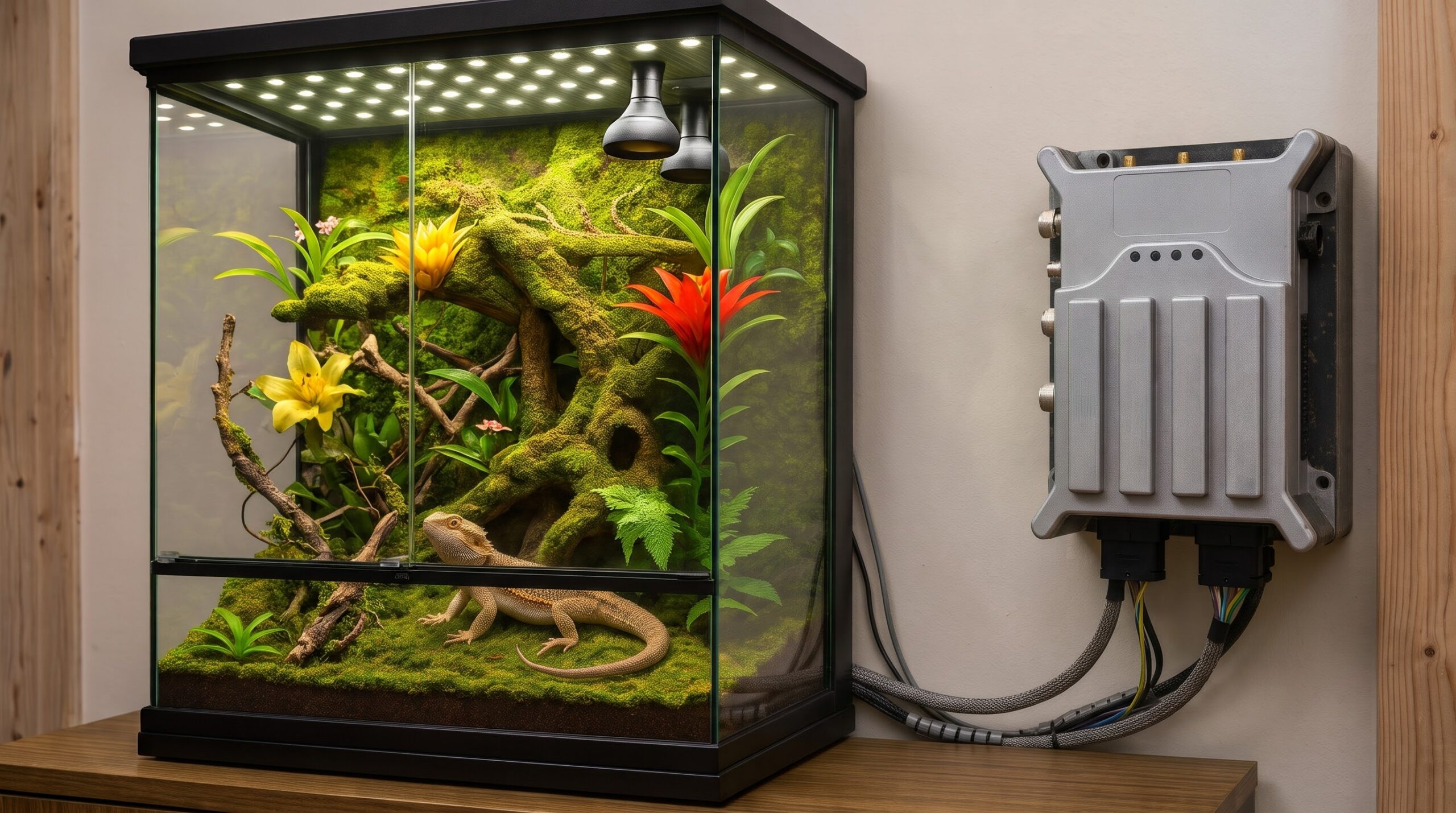
Which inputs and outputs does the design need?
An illustrative configuration uses one 6 Channel Input Module and one 10 Channel Output Module, occupying two of the four available slots. Select external temperature and relative-humidity transmitters with compatible electrical outputs; the controller does not contain the terrarium sensors or actuators.
| Module | Illustrative channel allocation | Electrical requirements |
|---|---|---|
| 6 Channel Input Module | Inputs 1–2: basking-zone and retreat-zone temperature; input 3: humidity | Supports 0–5 V, 0–12 V, and 0–24 V signals; select compatible transmitter outputs |
| 10 Channel Output Module | Outputs 1–5: heating, ventilation, misting, visible lighting, and UV scheduling interfaces | 1 A continuous and 1.8 A peak per channel; 10 A total module limit |
The GOcontroll Moduline M1 can acquire thermocouple measurements through an external transmitter that provides cold-junction compensation and an output compatible with the selected input module.
Output modules switch compatible DC loads or drive suitable external relay or driver interfaces. Compatibility depends on the selected module and load specifications. Do not assume that a heat pad, ceramic heater, fan, or lamp can connect directly. Provide the output module with its dedicated fused supply and follow the Moduline wiring and programming documentation.
The enclosure is rated IP67 when assembled and sealed according to its specified configuration. Installing the controller inside a terrarium still requires validation of temperature, condensation, water and UV exposure, and mounting conditions against its documented limits.
How could Node-RED run terrarium automation?
The following Node-RED workflow is a proposed application structure, not a supplied terrarium program:
- Acquire the external temperature and humidity signals through the selected input module and convert them using the transmitter specifications.
- Compare each temperature measurement with its configured target and command the compatible heater or ventilation interface.
- Compare humidity with its configured thresholds and command compatible misting or humidifying equipment. Coordinate these commands with temperature and ventilation logic.
- Apply day/night schedules to visible lighting and UV-lamp operating times.
- Write selected measurements and output commands to a configured storage destination.
A terrarium temperature controller and terrarium humidity controller therefore share application logic rather than operating as unrelated switches. Thresholds, sensor placement, and actuator behavior need application-specific review and testing.
For a terrarium lighting controller, timed switching, dimming, and UV measurement are separate functions. UV-lamp scheduling controls operating time; dimming requires a compatible lamp and driver, while UV-intensity measurement requires a suitable sensor.
For related environmental-control engineering, see R&D climate chamber control.
What does terrarium monitoring require?
A proposed dashboard could show measured temperatures, humidity, configured targets, and output states. It requires an application interface and network configuration. Logging requires software that acquires the relevant sensor or control signals and writes them to a configured storage destination; it is not automatic.
GOcontroll Connected provides secure remote access and firmware updates for the GOcontroll Moduline M1. Before deployment, change default passwords, disable unnecessary services, and disable root login in favor of a user account.
GOcontroll Moduline controllers are also used in electrification systems, while predictive-maintenance functionality requires application-specific software and validation.
Frequently asked questions
Is the Moduline M1 a plug-and-play terrarium thermostat?
No. It is a programmable modular controller. A custom installation needs selected I/O modules, compatible external sensors and actuators, any necessary load interfaces, and application software.
Which software can run terrarium automation?
The GOcontroll Moduline M1 runs Linux and supports MATLAB Simulink, Node-RED, and C. The documented MATLAB Simulink workflow requires Embedded Coder, MATLAB Coder, Simulink Coder, Stateflow, and the GOcontroll Simulink Toolbox, using the GOcontroll Linux template and building through Embedded Coder.
Does wireless terrarium monitoring require optional hardware?
Wi-Fi requires the optional Wi-Fi hardware. Wireless terrarium monitoring also needs a configured network, application interface, and deployment hardening; fitting wireless hardware alone does not provide those functions.
Can every UV lamp or heater be dimmed?
No. Dimming depends on the equipment and its driver interface. Match the control method to the equipment specification rather than assuming that a PWM output is suitable. Scheduling UV operating time does not measure UV intensity.
Key takeaways
- The Moduline M1 supports custom terrarium automation, not a turnkey thermostat installation.
- External sensors, transmitters, loads, and interfaces must match the selected modules.
- Lighting schedules, dimming, and UV measurement require different provisions.
- Logging and monitoring need configured application software; husbandry remains a separate responsibility.
Latest blog
-
Interview with Huib from H2Consultancy
Selecting a fuel cell is only the beginning. The components, control system and application must then work together. Huib Hupkens van der Elst of…
-
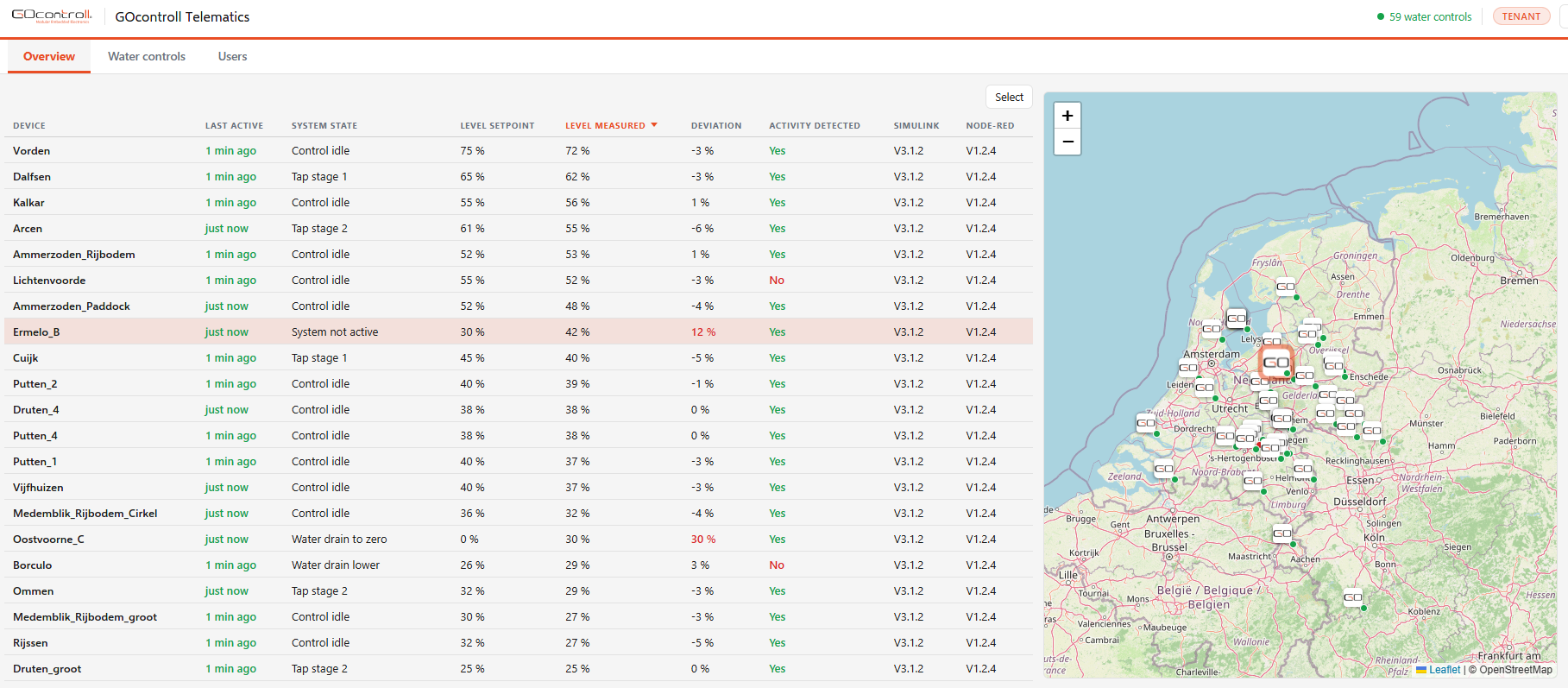
Telematics Retrofit: CAN Data or Added Sensors?
Older machines can join connected fleets, but a CAN connection does not guarantee useful data. Audit available signals, sensor requirements, and platform access before…
-
Dutch Embedded Controller Suppliers: 3 Routes
Compare three sourcing routes: custom electronics, an embedded computer, or a modular machine controller. Define what the supplier delivers and what your OEM still…