
Telematics Retrofit: CAN Data or Added Sensors?
Published on: November 6th, 2026 · Author: Rick Gijsberts
A telematics retrofit can add monitoring to an older machine, but useful operating data depends on accessible signals—not just a CAN connection. Audit location, engine hours, activity, and sensor measurements separately before selecting hardware.
Define the telematics retrofit scope
Telematics connects location and machine measurements to a remote machine monitoring system. Location tracking does not establish engine hours, fuel consumption, or productive work. Each metric needs an identified source and an agreed definition.
Retrofit compatibility does not necessarily mean access to machine data: a universal tracking unit can report location without reading a single CAN message.
Unlike retrofit automation for legacy machinery or upgrades to classic vehicle body electronics, this assessment concerns monitoring—not replacing machine controls.
Audit CAN access before choosing sensors
A CAN bus connection provides a potential acquisition path, not a decoded measurement list. Where J1939 information is available, verify the required messages, units, and scaling rather than assuming every desired metric exists.
- Check physical access. Identify the connection point, wiring, network settings, and termination requirements.
- Check signal documentation. Establish which messages contain the desired measurements and whether proprietary decoding or permission is required.
- Agree network behavior. Define whether passive reception is sufficient or permitted message requests are necessary. Validate that behavior on the machine.
If a required signal is absent, inaccessible, or undocumented, record it as unavailable until an alternative source is validated.
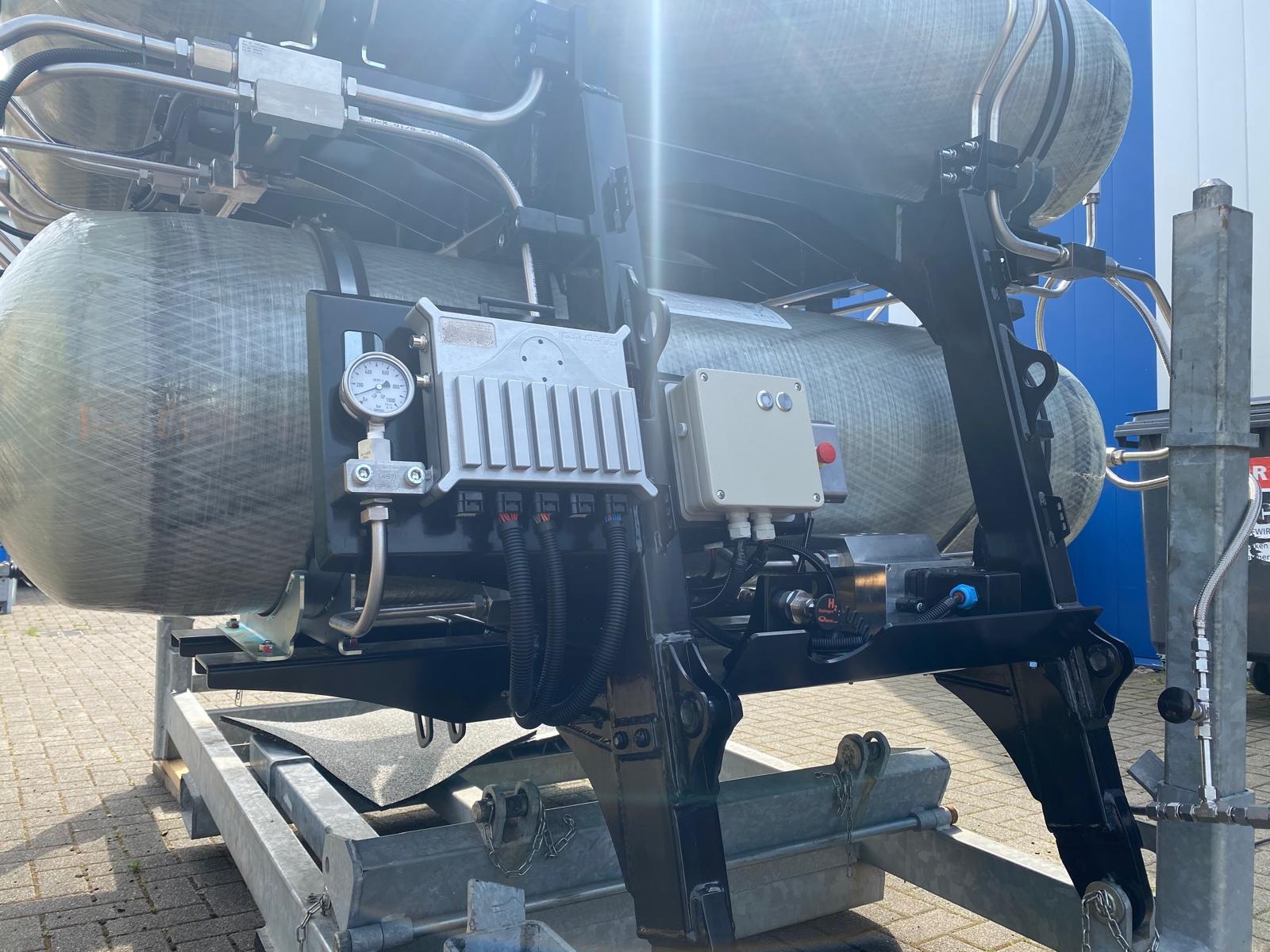
Match additional sensors to a Moduline M1 configuration
The GOcontroll Moduline M1 provides a Linux-based platform with four module slots and CAN interfaces. An illustrative monitoring configuration—not an installed customer case—could contain:
- Slot 1: 6 Channel Input Module for compatible voltage or frequency signals: 0–5/0–12/0–24 V and frequency up to 10 kHz.
- Slot 2, if needed: 4-20 mA Input Module for sensors with a 4–20 mA output.
- Remaining slots: unassigned unless the signal audit identifies additional requirements.
- Connectivity option: 4G/LTE/GPS hardware, selected for the application.
Match the actual electrical output of the machine monitoring sensors to the input module. Specify acquisition, decoding, and forwarding logic using Python, C/C++, or Node-RED; do not assume a ready-made decoder for every machine.
Build a telematics signal matrix
Create one row per required metric. Separate acquisition timing from transmission and platform refresh. The update-rate entries below are acceptance items to establish, not promised performance.
| Desired metric | Available source to verify | Decoding or calibration | Update-rate check | Remaining gap |
|---|---|---|---|---|
| Location | Optional GPS | Coordinate and timestamp mapping | Agree reporting interval | No operating-state information |
| Engine hours | Documented CAN total or validated running signal | Decode total or define accumulated runtime | Verify acquisition and reporting intervals | Historical total if runtime is newly accumulated |
| Machine activity | Documented CAN state or added sensor | Define working versus idle | Match interval to the activity definition | Productivity if no valid working-state signal exists |
| Pressure | Added sensor with compatible output | Apply sensor scaling and compare with reference | Agree measurement and reporting intervals | Other hydraulic measurements not instrumented |
Do not label key-on time as engine-running time unless the agreed measurement definition supports it.
Separate onboard acquisition from fleet-platform access
Onboard CAN acquisition and fleet-platform integration are separate engineering tasks. The automotive telematics controller overview covers the wider hardware context; the retrofit audit establishes which fields that hardware can actually deliver.
For a mixed fleet, confirm the receiving API, authentication, field mapping, timestamps, and refresh behavior. Standardized feeds can still omit fields or update more slowly than the onboard measurements. Use the T3 AEMP integration overview as platform-side context, not evidence of native Moduline AEMP support.
Validate before fleet rollout
Compare decoded values and added-sensor measurements with reference values across relevant operating states. Check timestamps, communication loss, reconnection, and the agreed CAN behavior. Before deployment, change default credentials, disable unnecessary services, and review remote access.
Use this retrofit go/no-go checklist:
- Signals: every mandatory metric has a documented, validated source—or an explicitly accepted gap.
- Installation: wiring, module selection, sensor scaling, and network behavior are verified for the machine configuration.
- Delivery: the fleet platform receives the required fields at the agreed intervals, including defined handling of missing data.
Frequently asked questions
Can telematics be added to an older machine without CAN?
Yes. Location tracking and compatible added sensors can support monitoring without CAN. Engine hours and activity still require validated signal sources and definitions.
Does J1939 guarantee access to all operating data?
No. Confirm which messages are available, how they are decoded, and whether access or proprietary information is required.
How does machine data reach a mixed-fleet platform?
Through the platform’s API or a standardized feed, configured for the required fields. Confirm authentication, field mapping, timestamps and refresh behavior: a standardized feed can omit fields or update more slowly than the onboard measurements.
Key takeaways
- Audit signals before selecting retrofit hardware.
- Distinguish location, engine runtime, and productive activity.
- Match added sensors to their actual voltage, frequency, or current outputs.
- Validate measurements and platform delivery before fleet rollout.
Latest blog
-
Interview with Huib from H2Consultancy
Selecting a fuel cell is only the beginning. The components, control system and application must then work together. Huib Hupkens van der Elst of…
-
Dutch Embedded Controller Suppliers: 3 Routes
Compare three sourcing routes: custom electronics, an embedded computer, or a modular machine controller. Define what the supplier delivers and what your OEM still…
-
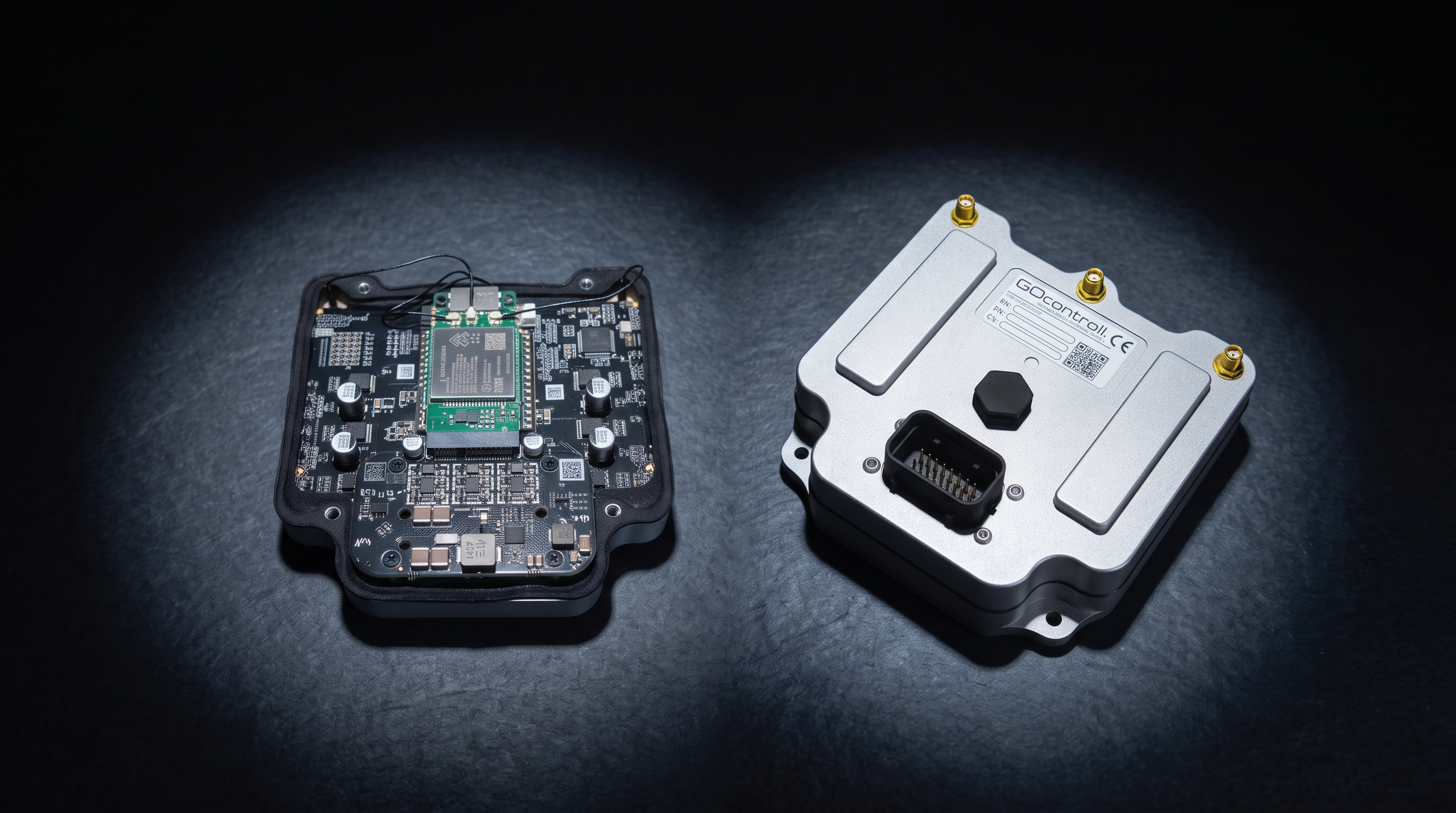
New Names, Same Quality: Introducing the GOcontroll Moduline Product Family
New names, one recognizable product family, and the same trusted quality. GOcontroll presents the Moduline S1, M1, L4 and HMI1. Four programmable controllers designed…