
Dutch Embedded Controller Suppliers: 3 Routes
Published on: October 31st, 2026 · Author: Rick Gijsberts
Dutch embedded controller suppliers can deliver three different things: custom electronics, an embedded computer requiring machine integration, or a programmable controller with machine I/O. Choose the route by deciding which engineering responsibilities your OEM will retain, not by comparing product names alone.
What should Dutch embedded controller suppliers deliver?
Ask for a written scope covering hardware, enclosure, machine interfaces, application software, production testing and maintenance. Category pages such as ICT Electronics’ embedded controllers and Batenburg Applied Technologies’ embedded IPCs are starting points, not substitutes for an agreed deliverables list.
Route 1: custom electronics development
Specify whether you are buying a design, manufactured assemblies or an integrated control system. Clarify schematic and source-code access, intellectual-property ownership, firmware maintenance, validation and responsibility for component changes.
Custom development fits when a specific board shape or hardware design is central to the machine. Do not assume that paying development costs transfers design ownership; make ownership and usage rights explicit in the agreement.
Route 2: an embedded computer or IPC
Treat an embedded computer or industrial PC (IPC) as a computing purchase unless the quotation includes more. Check who supplies sensor interfaces, actuator drivers, harnesses, power integration, mounting and application software.
This route fits an OEM that wants to select the computing platform and organize machine integration separately. Include that integration work when comparing offers.
Route 3: a modular machine controller
The GOcontroll Moduline M1 provides four module slots; the GOcontroll Moduline L4 provides eight. Both run Linux and use plug-in I/O modules. This route combines an existing controller platform with a machine-specific module configuration.
Document signal and load requirements before selecting modules:
- 6 Channel Input Module: 0–5/0–12/0–24 V inputs and frequency measurement up to 10 kHz.
- 4-20 mA Input Module: an option for current-loop inputs.
- 10 Channel Output Module: 1 A continuous and 1.8 A peak per channel, with a 10 A total module limit. Each output module needs its own fused supply.
Application programming remains a separate scope item. MATLAB Simulink, Node-RED and C are supported programming options; agree who develops and maintains the machine logic. The platform does not remove harness design, commissioning or application validation.
Our articles on custom embedded electronics modules and programmable controllers for custom control address implementation choices. The sourcing decision must also assign responsibility for the complete machine integration.
Compare engineering scope and purchasing commitments
Use this matrix as a quotation checklist, not as a promise about every supplier.
| Decision | Custom development | Embedded computer / IPC | Modular machine controller |
|---|---|---|---|
| Engineering ownership | Negotiate design and IP rights | Define platform and integration responsibilities | Separate platform ownership from machine software |
| Mechanical integration | Specify board, enclosure and connections | Assign housing, mounting and interfaces | Check enclosure fit and harness routing |
| Application programming | Assign firmware and application work | Assign runtime and machine software | Assign machine logic and commissioning |
| Changes | Agree redesign and release procedures | Assess computer and interface changes together | Review module allocation, wiring and software |
| Purchasing commitments | Ask about development fees and minimum orders | Confirm configuration, availability and order terms | Quote the exact controller configuration and order terms |
When is Moduline not the best fit?
Do not choose Moduline if a fixed PCB outline or design-ownership requirement makes an existing platform unsuitable. An IPC route may fit better if your team deliberately wants to engineer the machine I/O separately.
Bring these requirements to a Technical Fit Check to discuss controller choice, module allocation and integration responsibilities:
- Sensor types, channel counts and actuator currents, including simultaneous loads.
- Supply, communications, installation space and environmental requirements.
- Software ownership, machine variants, expected quantities and change-management responsibilities.
The programmable controller for prototyping article covers prototype considerations. Extend the sourcing review to the intended production configuration rather than evaluating only the first demonstrator.
Frequently asked questions
Does custom electronics development include machine application software?
Only if the agreed scope includes it. Separate hardware design, embedded firmware and machine application software, then assign acceptance criteria and maintenance responsibilities for each.
What identifies a Moduline hardware configuration when reordering?
The controller’s part number identifies its complete hardware configuration. Retain the corresponding configuration document to confirm module allocation and pinout; the serial number identifies the individual unit.
Key takeaways
- Compare supplier deliverables and retained OEM work, not just controller prices.
- Choose custom development when a specific hardware design is essential.
- Choose an embedded computer when your team intends to organize machine-interface integration separately.
- Consider Moduline when an existing programmable platform and plug-in machine I/O match the requirements.
- Agree software ownership, configuration control and purchasing terms before ordering.
Latest blog
-
New Names, Same Quality: Introducing the GOcontroll Moduline Product Family
New names, one recognizable product family, and the same trusted quality. GOcontroll presents the Moduline S1, M1, L4 and HMI1. Four programmable controllers designed…
-
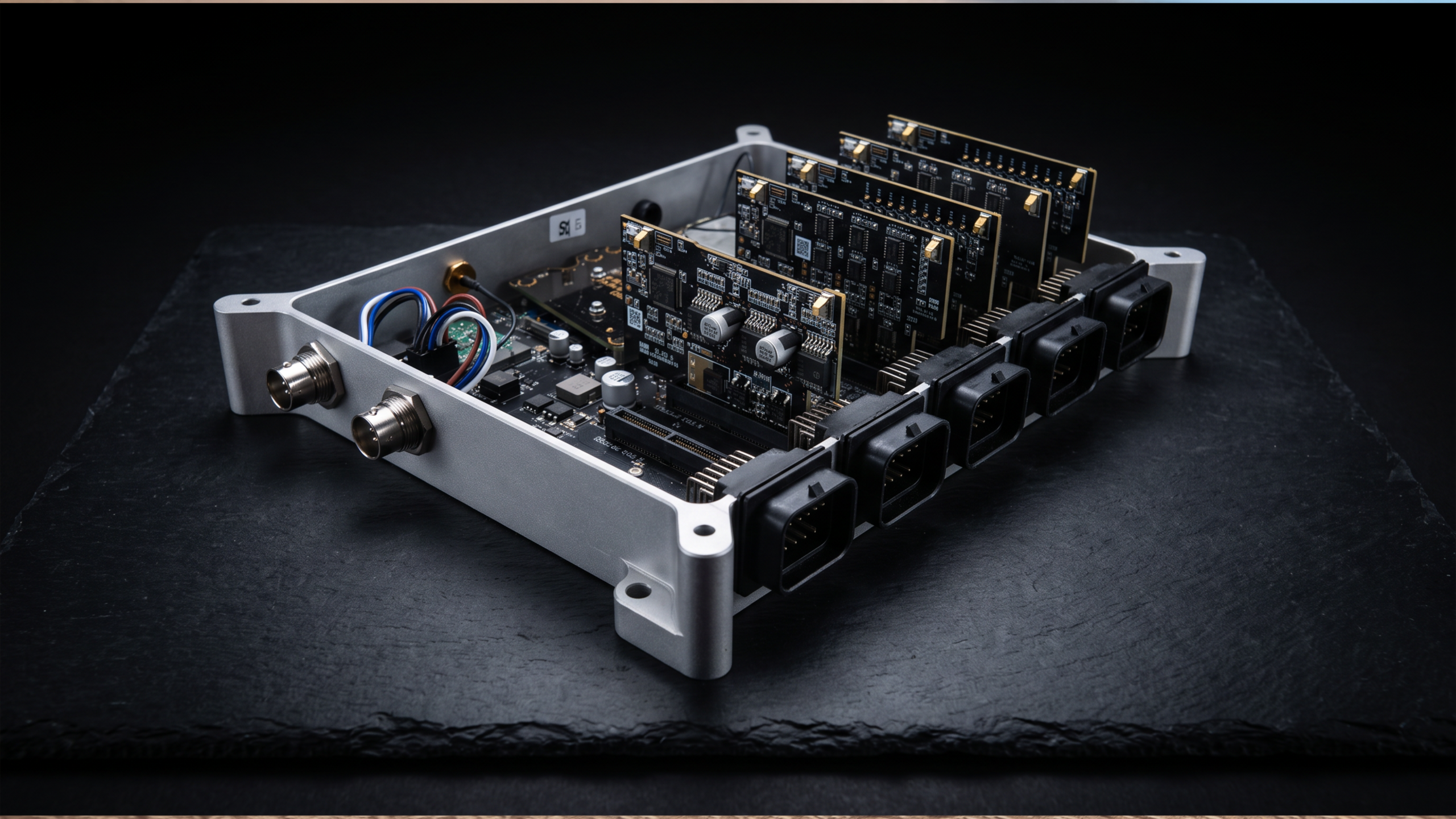
What Is a Control Unit? Inside a Machine ECU
Inside a machine ECU: how input circuits, processors, output drivers and communication ports turn sensor signals into controlled motion.
-
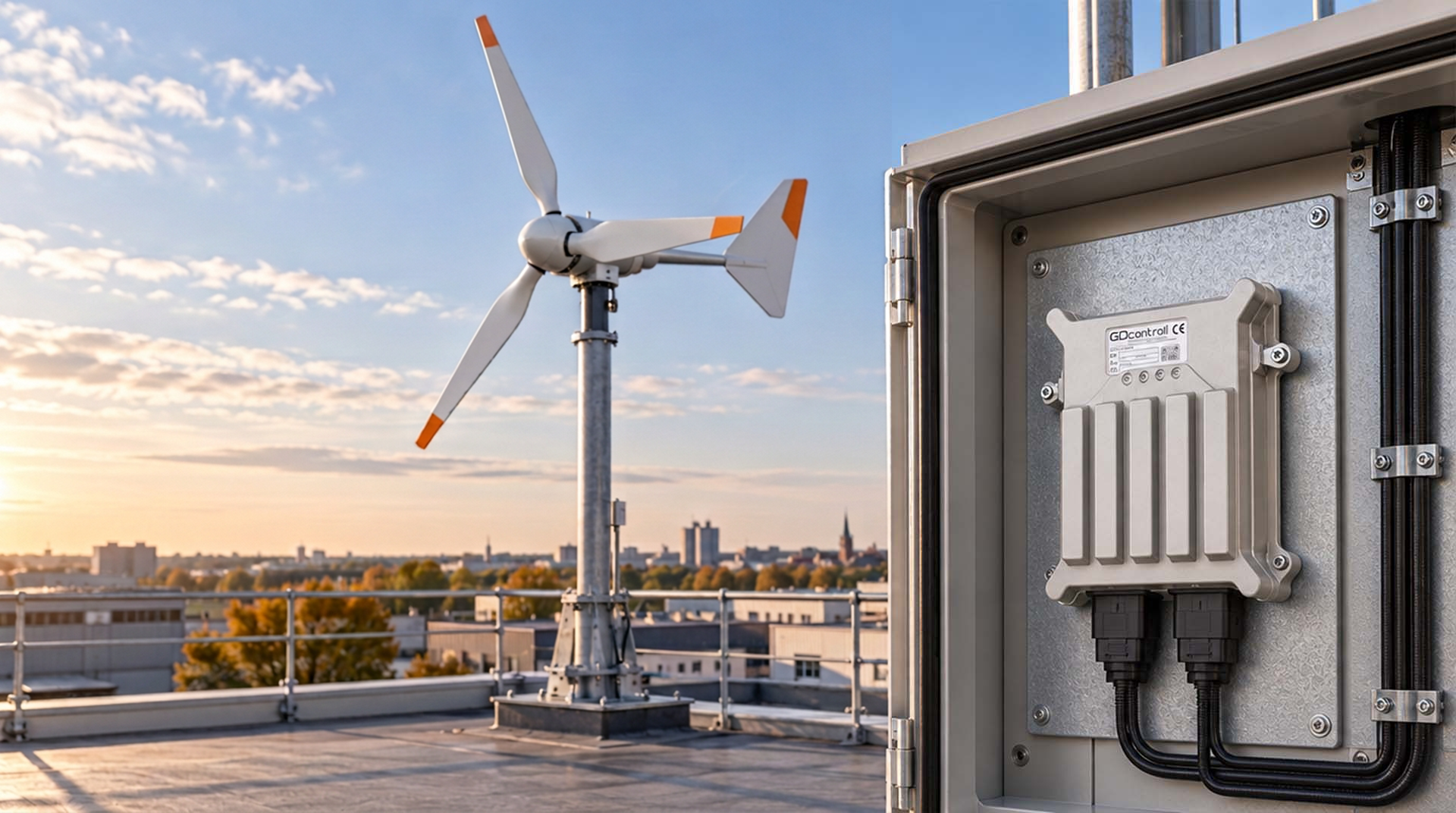
Ultimate Rooftop Wind Turbine Control Node: Modular Monitoring
The Moduline M1 controls rooftop wind turbines with smart load control, active yaw adjustment, vibration monitoring, and real-time remote dashboards.