
What Is a Control Unit? Inside a Machine ECU
Published on: October 23rd, 2026 · Author: Rick Gijsberts
A control unit is an electronic device that reads sensor inputs, runs control software and commands actuators. In mobile machinery and special vehicles, it is commonly called an electronic control unit (ECU).
How does a machine control unit work?
The basic chain is sensors → control software → actuators. A pressure sensor reports a measurement, software compares it with a target, and an output driver changes a valve command. Feedback lets the software adjust the command as conditions change.
This article covers machine control hardware, not car repair. For broader vehicle terminology, see Aptiv’s introduction to electronic control units.
Inputs: turning sensor signals into usable data
The input stage connects electrical measurements to software. Sensors may report voltage, current, frequency or encoder pulses; the input circuitry must support the actual signal and its range.
Moduline options include the 6 Channel Input Module, 10 Channel Input Module, 4-20 mA Input Module and Loadcell Module. A current-loop transmitter and a load cell require different interfaces. Choose the module from the sensor specification, then check the configuration-specific pinout rather than assuming all inputs are interchangeable.
Processor: executing the machine logic
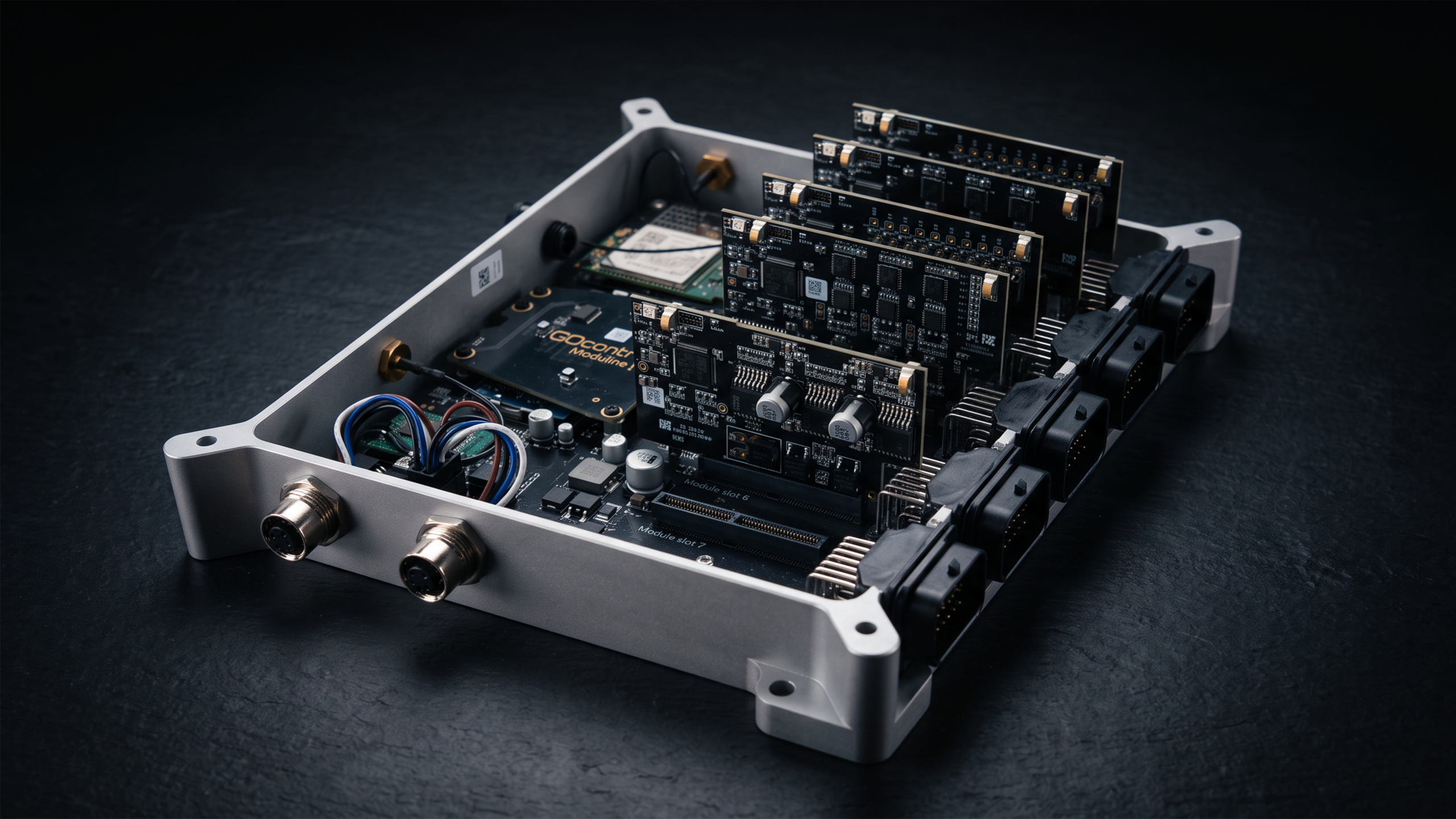
The processor runs the application and handles data. The GOcontroll Moduline M1 combines an i.MX8M Mini processor, Linux and four module slots. The GOcontroll Moduline L4 provides eight slots and an i.MX8M Mini with four Cortex-A53 cores at 1.6 GHz.
The GOcontroll Moduline S1 uses an STM32H573, an Arm Cortex-M33 microcontroller, with an ESP32-C3 wireless co-processor. Processor architecture and operating system are model-specific, not shared specifications for every Moduline controller. Linux-based M1 and L4 applications can use MATLAB Simulink or Node-RED.
Outputs: turning commands into electrical power
Output drivers switch power to actuators. High-side switching connects a load to the positive supply. PWM varies duty cycle; peak-and-hold changes current between actuation and holding phases. An H-bridge reverses current through a load. These are distinct functions, so verify support for the selected module and application.
Two documented Moduline output options have these limits:
| Module | Continuous current per channel | Maximum total module current |
|---|---|---|
| 6 Channel Output Module | 3.5 A | 15 A |
| 2 Channel Power Bridge Module | 10 A, including H-bridge configuration | 15 A |
The 2 Channel Power Bridge Module can serve suitable reversible loads, while the 6 Channel Output Module serves multiple actuator connections. Direct drive depends on the load and both current limits. Six channels at 3.5 A would exceed a 15 A module total.
Each installed output module needs a dedicated fused supply. Never fuse the ground.
Communication: why an ECU rarely works alone
A vehicle control unit exchanges measurements, commands and status with other devices. The GOcontroll Moduline L4 provides four CAN 2.0 B interfaces and one LIN interface, configurable as master or slave.
CAN describes the bus technology; SAE J1939 defines higher-layer communication on CAN. A CAN port alone does not establish J1939 software support or CAN FD capability. Network hardware, protocol implementation and application messages must all match. Vehicle ECU simulation addresses testing these interactions.
Power supply and housing: built for the vehicle
The GOcontroll Moduline L4 accepts 8–32 VDC at both K30 supply and K15 enable. Its load-dump protection is designed according to ISO 7637-2 5a/5b. Its aluminum enclosure is rated IP67, with a specified temperature range of -20 to +85 °C.
Those are L4 specifications, not blanket ratings for every model. Sealing also depends on assembly: the documented Superseal connector system requires sealing plugs in unused cavities. A rugged housing cannot compensate for an incorrectly assembled harness.
Fixed-function or programmable control unit?
A fixed-function unit serves a defined task. A programmable control unit lets the machine builder implement application logic; modular I/O also lets the builder select hardware interfaces. For the separate controller-category question, see the difference between an ECU and a PLC. For Linux software architecture, see embedded Linux ECU for modular control.
Frequently asked questions
What is an ECU, and is it the same as an ECM?
ECU means electronic control unit. An engine control module, commonly abbreviated ECM, is an engine-specific example rather than a name for every machine controller.
Can a control unit drive a motor directly?
Yes, when its output driver matches the motor’s voltage, current and direction-control requirements. Otherwise, an external driver is needed.
Are control unit inputs and outputs fixed?
Not necessarily. On a modular controller, installed modules determine the available interfaces. The configuration document identifies the modules and pinout of the actual unit.
Key takeaways
- A control unit combines input circuits, processing, output drivers, communication and power management.
- Match sensor interfaces and actuator loads to specific modules.
- Check per-channel and total-module current limits separately.
- Verify network protocols and environmental ratings for the selected controller model.
Latest blog
-
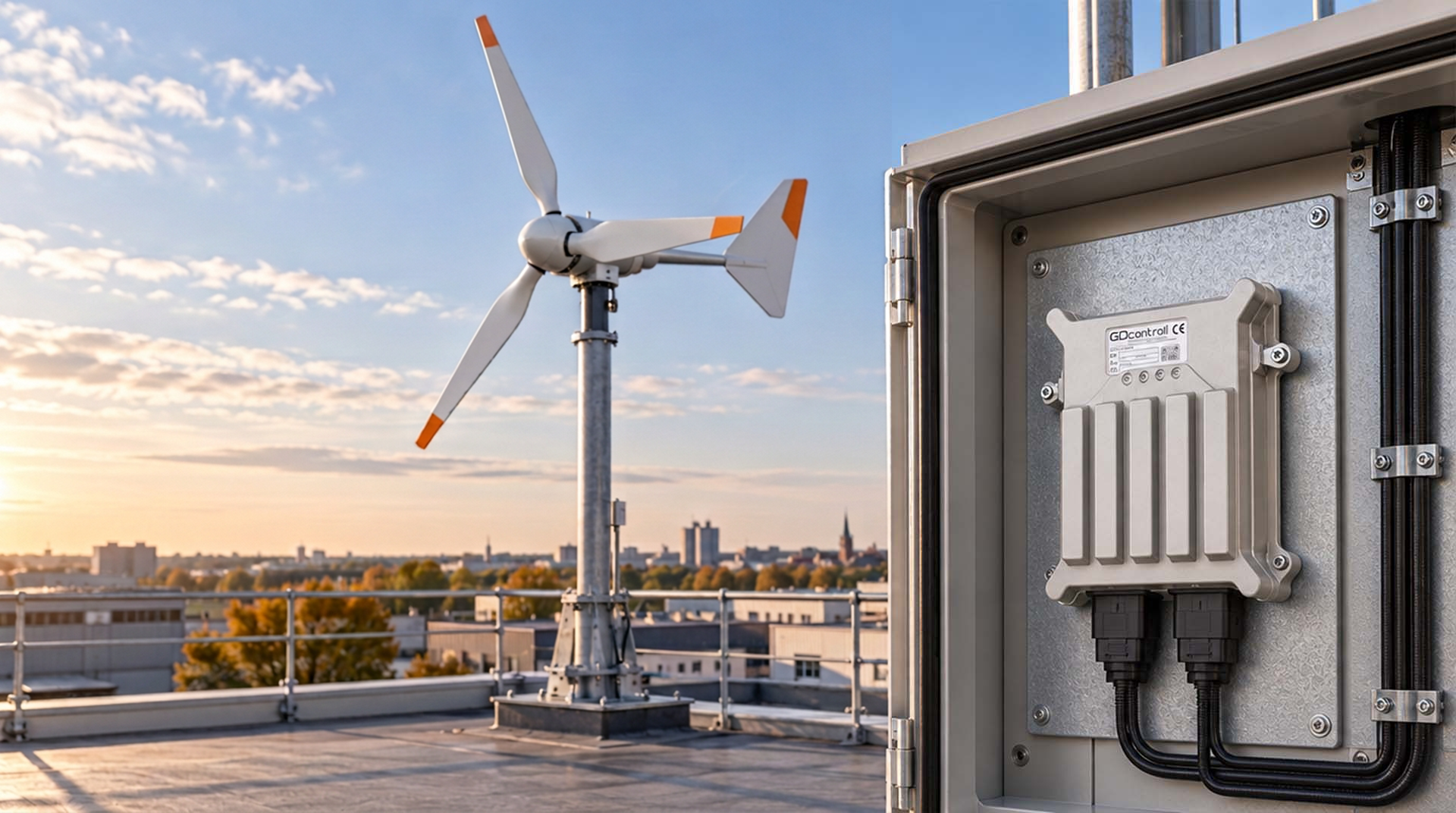
Ultimate Rooftop Wind Turbine Control Node: Modular Monitoring
The Moduline M1 controls rooftop wind turbines with smart load control, active yaw adjustment, vibration monitoring, and real-time remote dashboards.
-
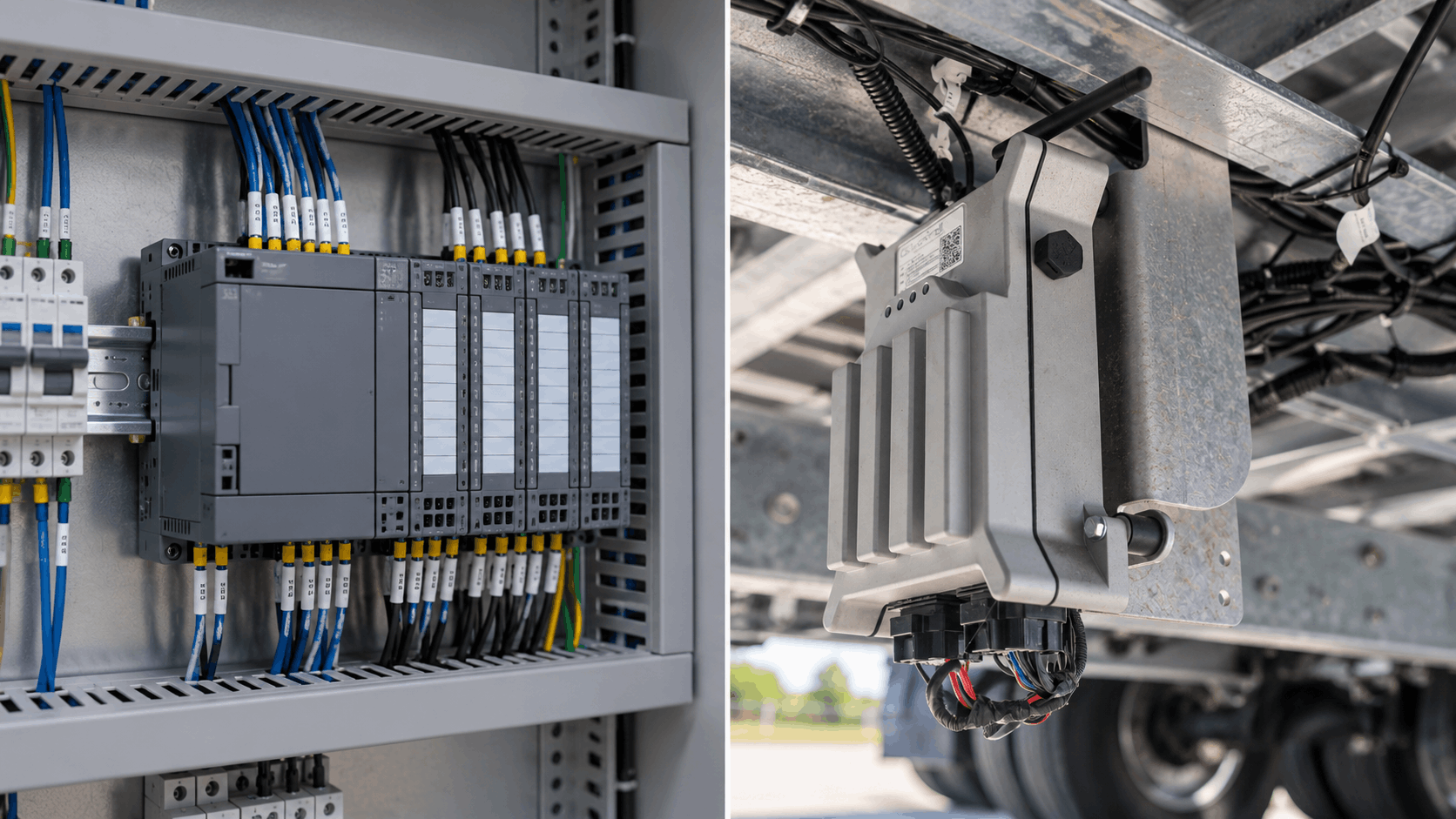
GOcontroll Moduline or a standard PLC: which controller fits your machine?
A standard PLC or GOcontroll Moduline? See how they differ in demanding environments, actuator control, flexibility and connectivity, with four applications in practice and…
-

Precise Linear Control Using Moduline
Moduline L4 linear actuator control delivers precise motion using half-bridge outputs, feedback inputs, and Simulink-based control loops.