
Vehicle ECU Simulation for Effective Testing
Published on: June 12th, 2025 · Author: Rick Gijsberts
Introduction
Simulating vehicle ECUs enables reliable and repeatable testing without the need for physical components or full vehicle setups.

Enhancing Test Environments with ECU Simulation
In the development and validation of modern vehicles, extensive testing of electronic control units (ECUs) is critical. These ECUs manage essential systems such as braking, powertrain, and safety features. However, conducting real-world tests can be time-consuming, expensive, and limited by the availability of complete hardware setups. Simulation environments allow developers to mimic ECU behavior under various conditions without connecting to actual components. This approach increases safety and efficiency during early development stages and facilitates automation of test cycles, error injection, and software validation. It also enables testing edge cases that are difficult to reproduce physically.
How GOcontroll Enables ECU Simulation
GOcontroll offers a configurable control platform that is ideal for developing and simulating ECUs. With its freely programmable control units and modular hardware, developers can replicate ECU behavior, implement CAN protocols, and integrate diagnostics into simulated networks. The hardware-configurable controller supports both real-time simulation and interfacing with existing systems, making it a reliable tool for verifying logic, timing, and communication. Its compact form factor and robust design make it suitable for lab-based simulation or integration into test benches. GOcontroll’s technology is particularly valuable during prototyping phases and low-volume test runs, where flexibility and precision are essential.
Tailored ECU Simulation with GOcontroll
GOcontroll provides the tools and expertise to support custom ECU simulations that align with specific project requirements. Whether for vehicle prototyping, software testing, or concept verification, GOcontroll’s platform enables a flexible and scalable simulation environment. Customers can rely on GOcontroll to help build simulation setups that reflect real-world conditions while maintaining full control over software behavior and testing procedures.
Latest blog
-

Rooftop Wind Turbine Control Node: Modular Control and Monitoring
The Moduline M1 controls rooftop wind turbines with smart load control, active yaw adjustment, vibration monitoring, and real-time remote dashboards.
-
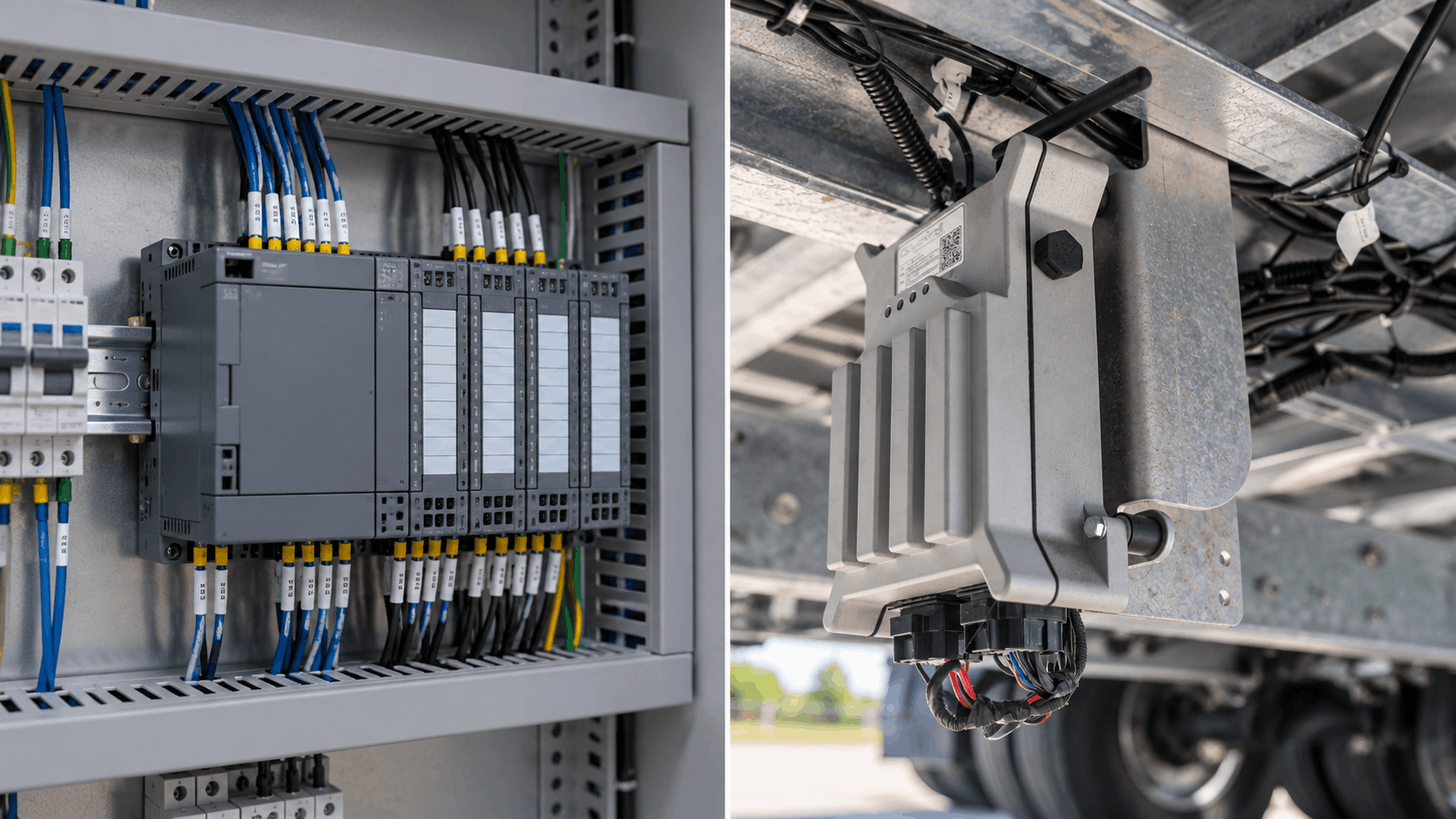
GOcontroll Moduline or a standard PLC: which controller fits your machine?
A standard PLC or GOcontroll Moduline? See how they differ in demanding environments, actuator control, flexibility and connectivity, with four applications in practice and…
-

Precise Linear Control Using Moduline
Moduline L4 linear actuator control delivers precise motion using half-bridge outputs, feedback inputs, and Simulink-based control loops.