
Agricultural IoT Modules for Smart Farming Control
Published on: June 1st, 2025 · Author: Rick Gijsberts
Agricultural IoT modules connect farm sensors and actuators to a control system for monitoring and automation. The GOcontroll Moduline M1 provides four plug-in I/O slots and Linux for local control; Ethernet or optional 4G/LTE provides a separate network path for data exchange.
What must agricultural IoT modules connect?
Agricultural control systems must match sensor signals and actuator loads. A voltage-output sensor needs a compatible voltage input, a 4–20 mA transmitter needs a current input, and a valve needs an output matched to its electrical requirements.
Modularity lets machine builders configure I/O for different machine variants without changing controller platforms. The control application and network connection remain separate design choices.
How the GOcontroll Moduline M1 handles control
The GOcontroll Moduline M1 programmable controller uses an NXP i.MX8M Mini running Linux, with four Cortex-A53 cores at 1.6 GHz, 1 GB RAM and 4 GB eMMC storage. Four module slots accommodate selected plug-in I/O.
Engineers can create customized control applications using Python, C/C++ and Node-RED. The platform also supports model-based development with MATLAB Simulink.
Interfaces include CAN bus, RS232, RS485 and Ethernet. Optional hardware includes 4G/LTE/GPS and Wi-Fi/Bluetooth. The rugged housing and industrial temperature tolerance support field deployment; available optional connections depend on the installed hardware.
Which modules fit agricultural sensing and control?
| Signal or control task | Plug-in module | Key parameters |
|---|---|---|
| Voltage and frequency signals | 6 Channel Input Module | 0–5 / 0–12 / 0–24 V; frequency up to 10 kHz |
| Current-loop sensor signals | 4-20 mA Input Module | 4–20 mA inputs |
| Solenoid valves and relays | 10 Channel Output Module | 1 A nominal, 1.8 A peak per channel; 10 A total per module |
| Motor and actuator control | 2 Channel Power Bridge Module | 10 A continuous per channel; 15 A total per module |
Per-channel ratings and module totals are separate limits. Two power-bridge channels rated at 10 A continuous do not provide 20 A combined: the module total remains 15 A.
Each installed output module needs its own fused supply. Select the fuse for the application without exceeding the module’s maximum total current, and never fuse the ground. Follow the specific controller’s configuration document for slot assignments and pinout.

How do sensing, valve control and connectivity fit together?
An illustrative irrigation control path is: a transmitter with a 4–20 mA output → 4-20 mA Input Module → GOcontroll Moduline M1 control application → an output module matched to the valve → valve.
Ethernet or optional 4G/LTE provides a separate network path for data exchange, subject to network availability. The project must still define the sensor, valve, control logic, data destination and application protocol. This is a selection example, not an installed customer configuration.
Documented agricultural uses
Documented applications include hitches, track width, steering and dashboard functions on the EOX E-OX 175. The EOX tractor-control case provides a practical machine-control reference.
Automated water management is represented by the Equisport project. Weather stations and climate control are also documented agricultural uses. For irrigation-specific context, see soil-moisture monitoring and irrigation control.
These references do not define a universal module configuration. Actual I/O selection depends on the project’s sensors, actuators and electrical loads.
Preparing a controller for field deployment
Commissioning proceeds through wiring, connection, login and programming. The Moduline knowledge base provides installation and configuration guidance. Powering the GOcontroll Moduline M1 requires at least K31 ground, K30 supply and K15 enable connections.
Before deployment, change default passwords, disable unnecessary services, and disable root login in favor of a user account. If optional Wi-Fi hardware is fitted, change its default access-point password too. These measures address development-oriented default access settings.
Frequently asked questions
What are agricultural IoT modules?
Agricultural IoT modules are hardware building blocks connecting farm sensors, actuators and communication links to a control system. On the GOcontroll Moduline M1, plug-in I/O modules provide electrical interfaces; network connectivity is a separate part of the configuration.
Can the Moduline M1 drive irrigation valves directly?
Yes, through an installed output module whose voltage, drive type and current ratings match the valve. The 10 Channel Output Module supports solenoid valves at 1 A nominal and 1.8 A peak per channel, within a 10 A total module limit. Check whether the valve requires AC, DC or latching drive; current ratings alone do not establish compatibility.
How does the Moduline M1 send data from a remote field?
The GOcontroll Moduline M1 can use optional 4G/LTE connectivity or wired Ethernet. Data exchange requires an available network and an application configured for the chosen destination and protocol. Optional cellular hardware does not guarantee remote-field coverage.
Key takeaways
- The GOcontroll Moduline M1 combines Linux with four plug-in module slots.
- Match input modules to sensor signals and output modules to actuator requirements.
- Check per-channel ratings, module totals and fused-supply wiring.
- Separate local control from network connectivity and application-level data exchange.
- Configure access credentials and services before field deployment.
Latest blog
-
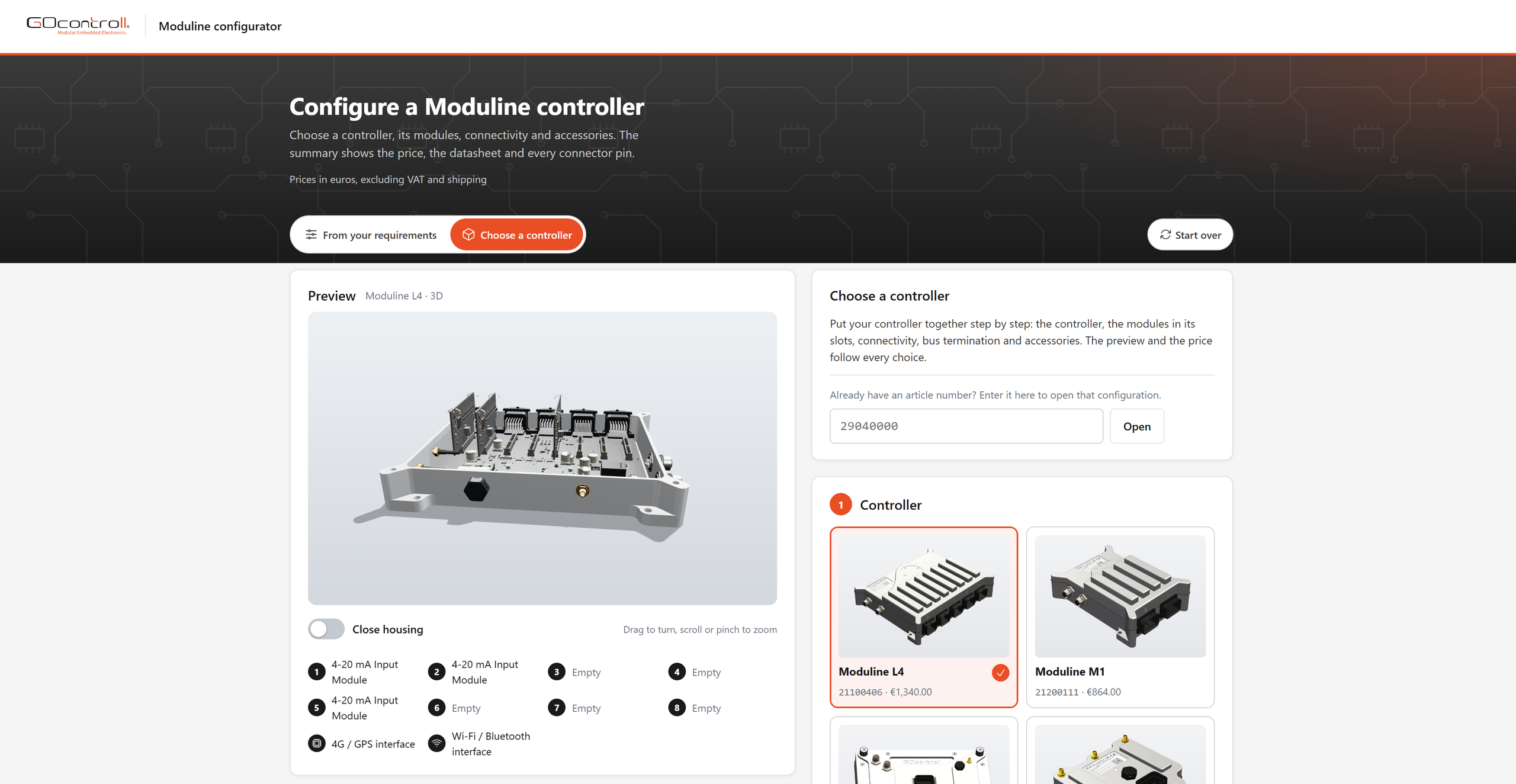
Which controller is right for your machine or vehicle? Start with what you want to control
Which connections and functions does your controller need? Practical examples explain inputs, outputs and communication, and show how to take your first steps in…
-
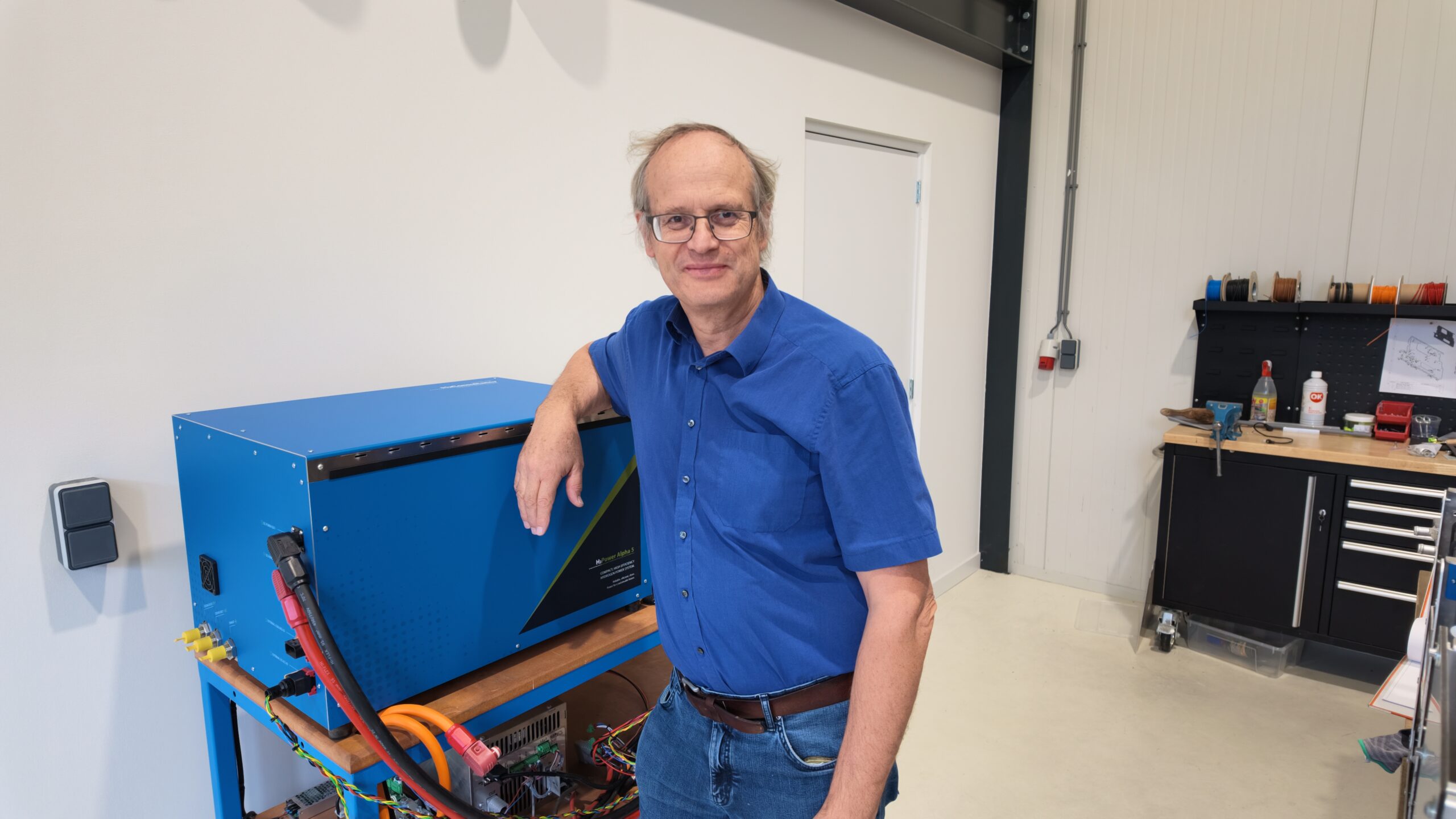
Interview with Huib from H2Consultancy
Selecting a fuel cell is only the beginning. The components, control system and application must then work together. Huib Hupkens van der Elst of…
-
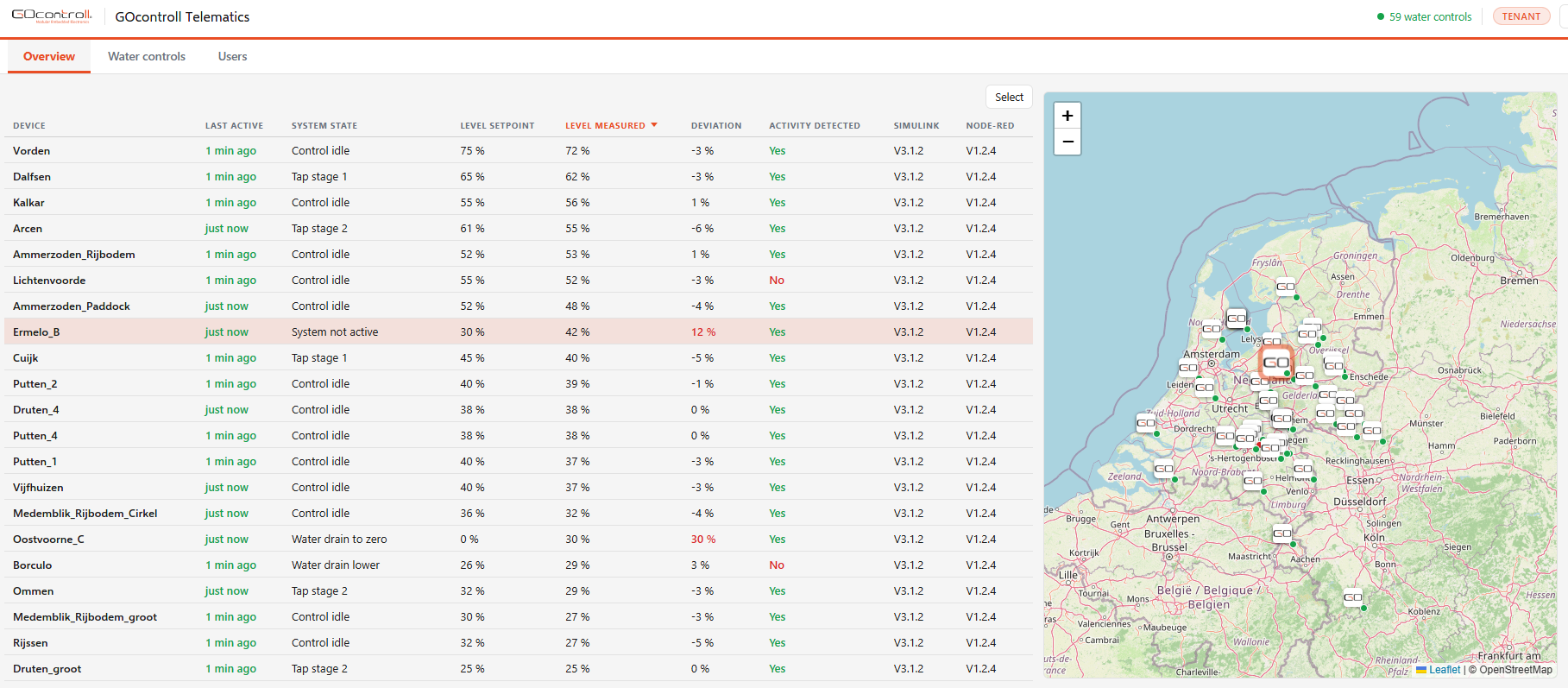
Telematics Retrofit: CAN Data or Added Sensors?
Older machines can join connected fleets, but a CAN connection does not guarantee useful data. Audit available signals, sensor requirements, and platform access before…