
Rainwater Sanitary Control System
Published on: October 6th, 2025 · Author: Mees Meyboom
Introduction
The GOcontroll Moduline M1 automates rainwater reuse for sanitary applications, reducing potable water demand through intelligent monitoring and control.

Sustainable Water Management for Modern Buildings
Reusing rainwater for sanitary purposes offers a practical and sustainable way to conserve drinking water in residential and commercial facilities. The GOcontroll Moduline M1 provides a compact, modular solution for implementing a Rainwater Sanitary Control System, combining smart monitoring, automated valve switching, and remote management. Designed for efficiency and reliability, it ensures optimal water use for flushing, cleaning, and irrigation — without compromising hygiene or system safety.
Application Overview: Efficient Use of Every Drop
A rainwater sanitary system collects water from rooftops and stores it in a reservoir, which is then distributed for non-potable applications. The Moduline M1 acts as the intelligent core of this setup, automating every stage of the process.
Typical functions include:
- Tank level monitoring using pressure or ultrasonic sensors.
- Pump and valve control for distributing rainwater to toilets, cleaning lines, or garden systems.
- Automatic mains water switching when the rainwater reservoir is empty.
- Filter management, including scheduled or differential-pressure-based flushing.
- Timed circulation to prevent water stagnation and bacterial growth.
By maintaining a balance between stored rainwater and mains supply, the system ensures reliable water delivery while minimizing environmental impact.
Hardware Setup: Compact, Modular, and Reliable
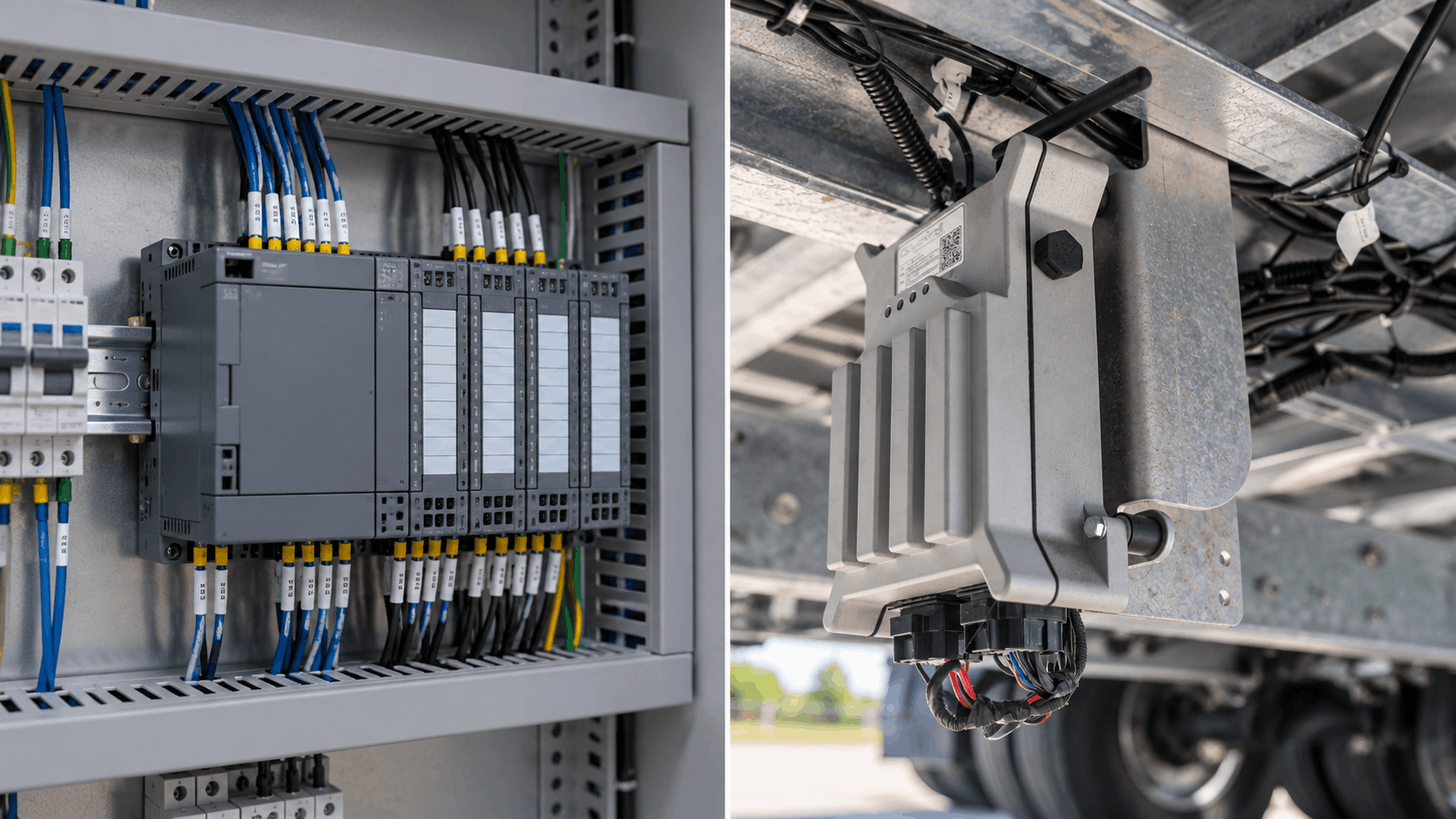
The GOcontroll Moduline M1 offers a flexible hardware architecture that easily adapts to different system scales and plumbing configurations.
A typical control setup includes:
- 6-channel input modules for tank level, pressure, and flow sensors.
- 6-channel output modules for pumps, solenoid valves, and filter actuators.
- Digital inputs for float switches or maintenance triggers.
- Relay outputs for mains water solenoids and system alarms.
Thanks to its modular I/O design, users can expand the system for multi-zone water management or integrate additional filtration and circulation stages. The Moduline M1’s robust aluminum housing makes it suitable for mechanical rooms or pump stations where humidity and vibration are common.
Control Logic: Automated Operation with Real-Time Monitoring
Using the GOcontroll Moduline M1, engineers can program fully automated routines through MATLAB Simulink or Node-RED, ensuring continuous, intelligent system operation.
Example automation functions:
- Priority switching between rainwater and mains supply based on tank level.
- Pump pressure regulation through feedback control.
- Scheduled or event-driven filter flushing.
- Timed circulation to refresh water in seldom-used pipelines.
All critical states — such as low water levels, pump faults, or valve errors — can trigger automatic alarms or messages to a building management system (BMS).
Data Logging and Building Integration
The Moduline M1 features onboard data logging and Ethernet, CAN, or Modbus communication, enabling seamless integration with building management systems.
This allows facility managers to:
- Track water levels, consumption, and usage cycles over time.
- View pump and valve activity for maintenance planning.
- Generate reports for sustainability tracking and regulatory compliance.
- Connect to GOcontroll Connected for remote visualization and secure updates.
By combining real-time data with remote management, building operators can optimize performance, detect inefficiencies, and ensure reliable long-term operation.
Smart Sustainability for Modern Infrastructure
With water scarcity becoming a growing concern, intelligent rainwater reuse systems are no longer optional — they’re essential. The GOcontroll Moduline M1 provides a powerful foundation for Rainwater Sanitary Control Systems, offering precision monitoring, automatic control, and scalable integration.
Whether installed in a single building or across a facility network, it ensures efficient, hygienic, and eco-friendly water management — helping organizations meet sustainability targets while lowering operational costs.
Latest blog
-

Rooftop Wind Turbine Control Node: Modular Control and Monitoring
The Moduline M1 controls rooftop wind turbines with smart load control, active yaw adjustment, vibration monitoring, and real-time remote dashboards.
-
GOcontroll Moduline or a standard PLC: which controller fits your machine?
A standard PLC or GOcontroll Moduline? See how they differ in demanding environments, actuator control, flexibility and connectivity, with four applications in practice and…
-

Precise Linear Control Using Moduline
Moduline L4 linear actuator control delivers precise motion using half-bridge outputs, feedback inputs, and Simulink-based control loops.